
How AI tools for differentiated instruction K-12 help you
Did you know in a single classroom, reading abilities can range across eight different grade levels? This incredible diversity is your daily reality.
Meeting every young learner where they are feels like an impossible task. But what if your tools could adapt as dynamically as your students do?
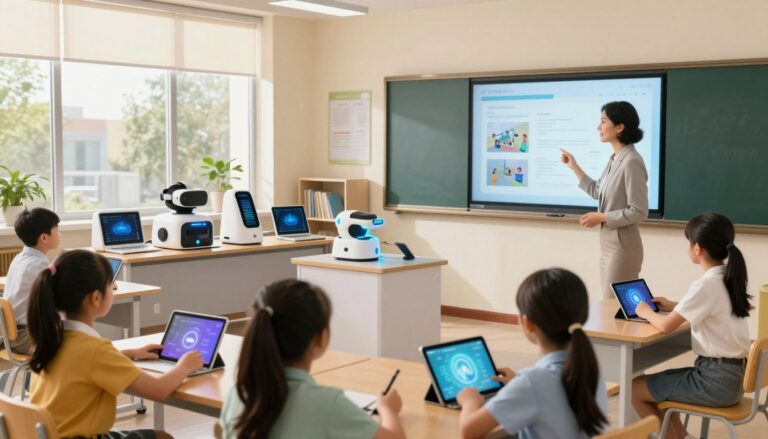
Modern AI tools for differentiated instruction K-12 are designed for this challenge. They create unique, personalized learning paths that respond to each student. This means you can address individual needs without burning out.
You gain a powerful partner in managing your classroom. These technologies handle complexity, giving you back time and energy. You can then focus on what truly matters: connection and instruction that sparks growth.
Key Takeaways
- Creates personalized educational paths for every learner.
- Helps teachers efficiently manage a classroom with diverse needs.
- Fosters a more inclusive and supportive learning environment.
- Automates routine tasks, freeing up time for direct student interaction.
- Drives academic growth by meeting students at their current level.
- Provides actionable insights to inform your teaching strategies.
Understanding Differentiated Instruction and Its Challenges
Educational theorists like Howard Gardner and Lev Vygotsky laid the groundwork for modern personalized learning approaches. Their ideas shape differentiated instruction. This method tailors teaching to match each student’s unique pace and style.
The Need for Personalized Learning in Modern Classrooms
Today’s classrooms are wonderfully diverse. Students have varied needs and interests. A single lesson plan rarely fits all.
True differentiation requires flexible grouping and constant assessment. These strategies help teachers meet student needs. The goal is meaningful learning experiences for everyone.
Barriers of Traditional One-Size-Fits-All Teaching
The old model presents clear hurdles. It assumes everyone learns the same way. This creates frustration for many students.
Educators face a huge time crunch. Designing multiple content paths is exhausting. Managing a room full of different learners is tough.
“Education must be tailored to the individual, for it is the individual who learns.”
Shifting away from rigid models takes significant effort. Teachers must adapt constantly. They need the right support to succeed.
| Aspect | Traditional Teaching | Differentiated Instruction |
|---|---|---|
| Pace | Fixed for the whole class | Adapts to individual learners |
| Content | Same material for everyone | Varied based on readiness |
| Assessment | One test at the end | Ongoing and formative |
| Student Role | Passive recipient | Active participant |
Implementing these ways of teaching is challenging. Yet, it’s essential for modern education. The right strategies can make it possible.
The Rise of AI in Education
A 2023 academic study delivered a striking result. Students using an intelligent tutor achieved grades 15 percentile points higher than peers in a standard course. This marks a turning point in modern education.
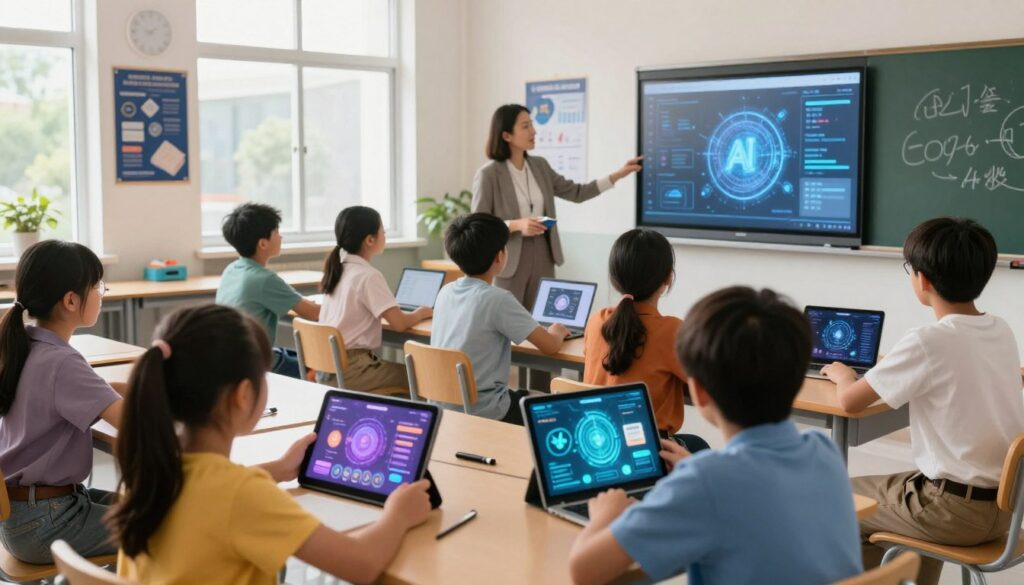
Smart technology is rising to meet complex classroom needs. It acts as a force multiplier for educators. These systems provide new ways to reach every learner.
How Artificial Intelligence Enhances Learning Experiences
Artificial intelligence transforms student experiences. It analyzes work as it happens. The software spots where a student struggles instantly.
This real-time insight is powerful. It helps teachers provide targeted support right away. Learning becomes more responsive and effective.
Overcoming Time and Resource Constraints with AI
These technologies tackle a major hurdle: time. They automate jobs like grading and grouping. This gives teaching teams hours back each week.
You can then focus on meaningful instruction and connection. This shift is key for implementing differentiated instruction strategies consistently. It helps drive student success.
| Aspect | Traditional Support | AI-Enhanced Support |
|---|---|---|
| Feedback Speed | End of assignment or test | Real-time, during the activity |
| Task Automation | Manual grading & grouping | Automates routine scoring and data analysis |
| Intervention Timing | Often after a student falls behind | Proactive, based on ongoing patterns |
| Personalization Scale | Limited by teacher time | Scalable to each individual learner |
Integrating these tools changes your classroom management. You gain a partner dedicated to personalized learning for all your students.
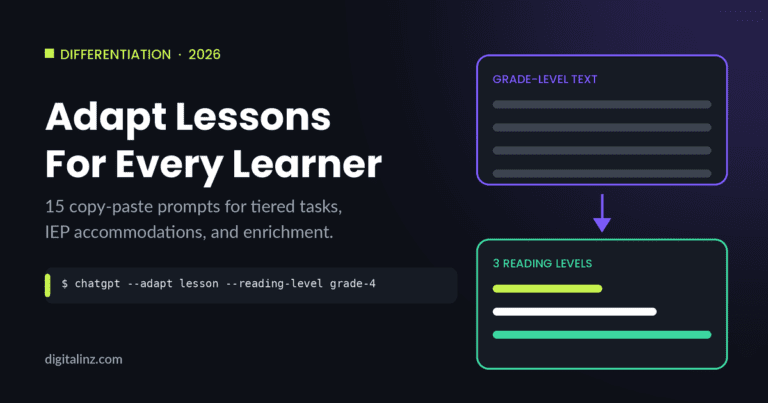
Differentiation is essential — but designing it for 25+ students is a real challenge. The K-12 Teachers AI Toolkit helps you use ChatGPT to quickly adapt materials, create leveled activities, and meet your students where they are without doubling your prep time.
AI tools for differentiated instruction K-12: Key Features and Benefits
You can now generate tailored reading materials in seconds with a simple text prompt. A 2023 university case study showed this approach, alongside other smart features, led to a 25% improvement in grades, test scores, and engagement. These platforms deliver core advantages by adapting to each learner, saving you precious hours, and fostering fairness.
Adaptive Learning and Real-Time Feedback
Smart educational software adjusts content difficulty in real-time. It matches each individual student’s current level. This provides instant support the moment a concept becomes challenging.
You gain a clear window into student progress. This ongoing assessment helps you adjust your teaching strategies immediately. It turns data into actionable ideas for support students.
Streamlining Lesson Plan Creation with AI Assistance
These systems are powerful partners for educators. They drastically cut down the time spent designing lesson plans. A quick prompt can yield varied activities and materials.
You can create quizzes, projects, and reading passages aligned to specific student needs. This efficiency ensures you have the resources for every learner in your classroom.
Driving Engagement and Equity in Diverse Classrooms
Immediate feedback is a powerful way to enhance educational equity. It ensures every student has a fair chance to master the content. Artificial intelligence helps close opportunity gaps.
When students work with materials made for them, student engagement soars. You are better equipped to provide the targeted instruction and support each person deserves.
Implementing AI Solutions in Your Classroom
Bringing new technology into your room doesn’t have to be a daunting, all-or-nothing project. You can start small and build confidence. The goal is to find tools that work seamlessly with your existing routines.
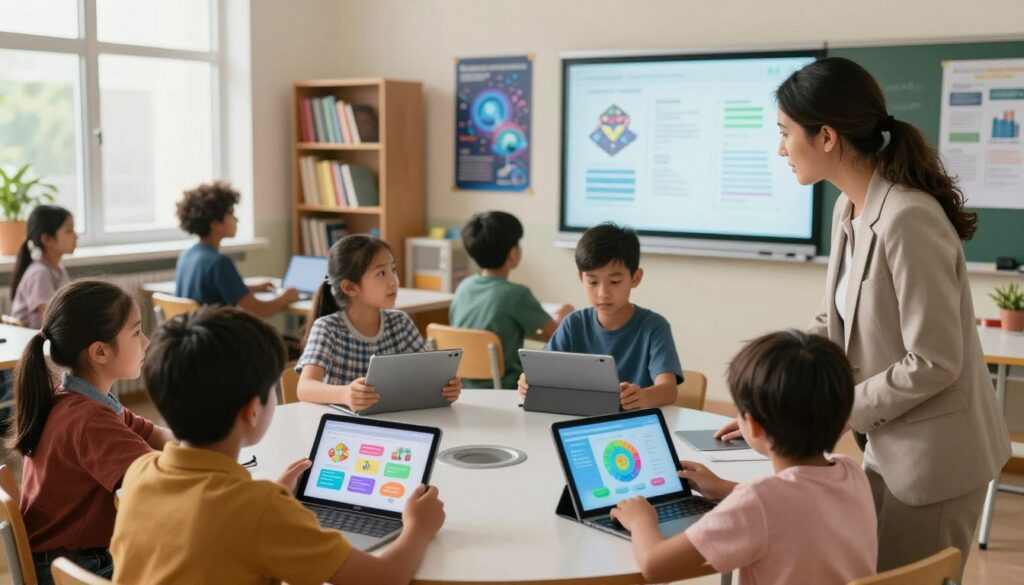
Steps to Integrate AI into Your Teaching Practice
Follow this practical path to get started smoothly and effectively.
- Begin with accessible options. Choose a low-cost or free platform that integrates easily. This lowers the barrier for you and your students.
- Ensure fair access for all. Partner with your school to use shared devices. This guarantees every student can participate fully.
- Focus on core benefits. Use your new tool to create personalized learning paths. It should save you time on planning and grading.
- Communicate openly. Teachers should talk with parents and learners about data privacy. Explain how student information is protected.
- Take intentional, small steps. Add one new activity per week. This gradual approach makes it easier to support students with different needs.
- Explore and adapt. As you grow comfortable, you’ll discover new ways to enhance your teaching. You can better meet the diverse needs in your classroom.
This process turns innovative instruction into a manageable part of your day. You become more effective without adding extra stress.
Strategies for Maximizing Student Success with AI
Imagine a grammar lesson where every student, from ELL learners to advanced readers, receives just-right support. This is possible with modern educational technology. You can design experiences that meet diverse needs efficiently.
Innovative Approaches to Differentiating Instruction
Use a platform like Khanmigo to tailor a lesson on nouns using Brian P. Cleary’s book. A simple prompt can generate specific strategies. For example, it might suggest picture cards for ELL students during group work.
This creates a personalized learning path for each individual. It keeps all learners engaged, whether they need extra help or a greater challenge. You address student needs in real time.
Connecting Student Interests and Real-Life Applications
Link abstract ideas to the real world to boost student engagement. Use sports statistics to teach math vocabulary. Create space-themed problems because your class loves astronomy.
These creative lesson plans make content relatable. They provide ongoing assessment and immediate feedback. This support is critical for academic success.
| Strategy | Traditional Differentiation | AI-Enhanced Approach |
|---|---|---|
| Grammar Lesson Support | One set of materials for all | Tailored resources (e.g., picture cards for ELL, advanced text for others) |
| Math Vocabulary Building | Generic textbook examples | Custom problems using student interests like sports stats |
| Ongoing Feedback | Periodic quizzes and tests | Real-time insights during activities to guide instruction |
| Lesson Plan Creation | Hours of manual research and design | Quick generation of varied activities from a single prompt |
When you tailor your instruction this way, you build a more inclusive classroom. Every student feels valued and supported.
Conclusion
The future of teaching is not about working harder, but about working smarter with the right support. Modern resources help you address the wide range of student needs in your classroom efficiently.
These tools are designed to assist teachers, not replace them. They save valuable time on lesson planning. This lets you focus on delivering personalized learning experiences and meaningful instruction.
Embracing these solutions is key for modern education. They provide powerful ways to ensure every learner gets the support required for academic success. Your expertise, combined with these resources, creates a thriving environment for all students.
FAQ
How can these technologies help me reach every learner in my class?
I’m already stretched thin. Will adding this to my plate take more time?
How do I ensure the technology is supporting my lessons, not replacing my teaching?
Can these solutions work for subjects beyond math and reading?
My school has limited tech budgets. Are there affordable options to start with?
How does this support help students who are learning English?
Every student deserves a lesson that fits them. The K-12 Teachers AI Toolkit makes differentiated instruction more manageable — with prompts that help you modify, scaffold, and extend learning for any student in your class. Teaching everyone well, without burning out.