
How to Write an About Page Small Business That Tells Your Story
Did you know that over 70% of consumers report feeling a stronger connection to a company after reading its “About Us” section? This isn’t just a corner of your site. It’s the heart of your digital presence.
This dedicated space lets visitors know who you are, what you do, and, most importantly, why you do it. It transforms your online home from a simple storefront into a compelling narrative.
Your website is the primary hub where your identity unfolds. Crafting this section is a vital step in establishing that identity for potential customers. Every element should reflect your unique personality.
This ensures your core mission resonates with every visitor. A generic company description won’t cut it in today’s crowded marketplace.
You need a narrative that turns casual browsers into loyal supporters. This guide provides the essential tools to build that connection. Let’s make your brand stand out by focusing on what makes it truly special.
Key Takeaways
- Your “About Us” section is crucial for building trust and connection with site visitors.
- This part of your site explains your purpose and mission to potential customers.
- A strong narrative helps differentiate your company from competitors.
- Reflecting your unique personality here makes your mission more relatable.
- A well-crafted story can convert interested visitors into dedicated supporters.
- Your digital identity is largely shaped by the content on this essential page.
- Avoid generic descriptions to stand out and create a memorable impression.
Understanding the Importance of an About Us Page
The data speaks volumes about the critical role your company’s story plays in visitor engagement. This specific section of your site does much more than list facts. It builds the foundational trust that turns casual viewers into committed supporters.
Statistics on Visitor Engagement
Research indicates that 64% of individuals choose brands aligned with their personal values. Your page is the perfect place to showcase these principles. A clear mission statement matters, as 63% of consumers prefer to buy from purpose-driven companies.
Visitors who explore this part of your website spend 22.5% more than those who do not. This demonstrates its direct impact on revenue. Over half of all people want to see this section immediately upon arrival.
Furthermore, nearly one-third identify it as a site’s most essential component. Always include accessible contact details, too. A staggering 44% of site visitors will exit if they cannot find this information.
These figures prove that your narrative is a powerful business asset. Crafting it with care directly influences how people perceive your brand.
Defining Your Unique Brand Story
Imagine a page that doesn’t just describe what you sell but reveals why you started. This is the soul of your enterprise. Your narrative separates you from every other company.
Consider Slack. Their story explains a motivation: making work-life simpler and more productive. Your brand story should do the same for your product.
Every venture has a unique origin. Sharing yours helps potential customers understand your reason for existing today. It provides a clear example of your mission solving real problems.
Avoid generic descriptions. Focus on the specific values driving your team. This focus builds a genuine connection with the people visiting your website.
| Aspect | Generic Description | Specific Brand Story |
|---|---|---|
| Focus | Lists features and services | Explains the “why” and core values |
| Connection | Transactional and impersonal | Emotional and relatable |
| Outcome | Visitors see just another company | Visitors see a mission they can support |
By sharing your journey, you show the human side of your brand. This builds a lasting bond with your audience. Let your story be the bridge that turns visitors into loyal supporters.
Identifying Your Brand Values and Mission
Your company’s values and mission form the ethical compass that guides every decision you make. They tell people visiting your website why you exist beyond making a sale.
Look at MillerKnoll. They state a clear purpose: taking on the biggest challenges facing our global community. This shows the importance of values in action.
When you identify your brand values, you help potential customers understand the ethical foundation of your business. They see what principles stand behind your product or service.
A strong mission acts as a guide for your team. It ensures every story you tell aligns with your core goals.
| Element | Company Without Clear Values | Value-Driven Brand |
|---|---|---|
| Customer Trust | Based primarily on transaction | Built on shared principles and ethics |
| Team Direction | Goals may shift frequently | Decisions align with a stable mission |
| Market Position | Seen as just another option | Recognized for a distinct purpose |
By clearly stating your mission on your company’s page, you differentiate from competitors who lack a clear purpose. This turns your brand from forgettable to beloved.
Developing a Compelling Elevator Pitch
Your elevator pitch distills your entire brand story into a powerful, memorable snippet. It explains what you do, what makes you unique, and why your audience should care. This concise message is your secret weapon for turning curious visitors into engaged prospects.

Crafting a Short, Impactful Message
To get started, focus on what sets your company apart. Why should your target audience care about your product? Your pitch must be relevant to potential customers, clearly showing the value you provide.
An effective elevator pitch includes:
- A clear statement of your core service or product.
- The unique benefit that distinguishes you from others.
- A reason why this matters to the people you serve.
Keep this message concise. Visitors should grasp your mission and values quickly, without a lengthy history. A well-crafted pitch on your website acts as a powerful hook. It encourages people to explore your brand journey further.
This approach turns casual interest into genuine engagement. Your story becomes accessible and compelling from the very first moment.
Tips on how to write an about page small business
Your site’s profile section should answer one primary question for the reader: ‘What’s in it for me?’ Shift your focus from self-promotion to the benefits you provide. This turns your narrative into a powerful tool for connection.
To get started, highlight the specific problems your company solves. Your customers want to know how you make their lives easier or better. Lead with the value you create for them every single day.
Keep your content concise. People are interested in solutions, not a lengthy chronology. A professional yet friendly tone helps build immediate trust with every new visitor.
| Focus Area | Self-Centered Approach | Benefit-Led Approach |
|---|---|---|
| Primary Message | “We are the best at X.” | “We help you achieve Y.” |
| Content Structure | Lists company milestones and features. | Explains customer challenges and your solutions. |
| Visitor Reaction | Sees a generic sales pitch. | Feels understood and sees a potential partner. |
| Trust Building | Limited; feels impersonal. | Strong; establishes relevance and empathy. |
Use these tips to ensure your website profile remains authentic. This space is a prime opportunity to tell your brand story in a way that resonates. A relatable tone makes your core mission clear to the right customer.
Showcasing Your Team and Humanizing Your Brand
Putting faces to names transforms a faceless corporation into a community people want to join. Your team is your greatest asset for building genuine rapport. This part of your site turns abstract values into relatable individuals.
Using Team Photos and Videos
Visuals make your brand feel immediate and authentic. Look at Salesforce. They use mascots and candid photos to show they care deeply for their community.
Include headshots with names and roles. This helps potential customers connect with the real people behind brand operations. A short company video introducing your crew is a powerful tool.
Adding Personal Stories
Sharing personal anecdotes makes your enterprise feel approachable. It builds trust by revealing the human story behind the work.
To get started, consider simple tips. Add fun facts or favorite snacks to team bios on your about page. These small details create a memorable, personal touch.
Incorporating Visual Elements to Enhance Engagement
Incorporating dynamic visual elements directly boosts how long people stay and interact with your content. These components turn a standard website into an engaging destination. They help communicate your mission and values quickly.
Choosing High-Quality Images
Professional photos create a strong impression for your brand. Use crisp images of your team or product. This builds trust with potential customers.
High-quality visuals make your page feel professional. They resonate deeply with your target audience.
Embedding Videos for Interaction
Video is a powerful tool for interaction. Research shows 86% of video marketers report increased traffic to their site. Embed testimonials to show real customer experiences.
This strategy increases time spent on your page. It turns casual viewers into engaged people.
| Visual Element | Primary Use | Engagement Benefit |
|---|---|---|
| High-Quality Photos | Showcase team/product | Builds professional brand image |
| Embedded Videos | Demonstrations/testimonials | Increases time on page |
| Animations/Collages | Highlight key messages | Makes content more memorable |
Use these marketing tips to align visuals with your story. Ensure every image supports your core message. To get started, audit your current content. Visuals differentiate your company from competitors.
Crafting a Timeline for Your Business Journey
Share your enterprise’s path in a format that highlights progress and builds credibility. A visual timeline is a fantastic tool for this. It turns your complex history into an engaging, easy-to-follow story.
Focus on milestones that truly matter to your customers. When did your company launch? What specific problem did you set out to solve? These details give your brand a relatable origin point.

Keep this section short and visually appealing. Use icons, photos, or a short video to illustrate key moments. This approach ensures people stay engaged with your narrative instead of skimming.
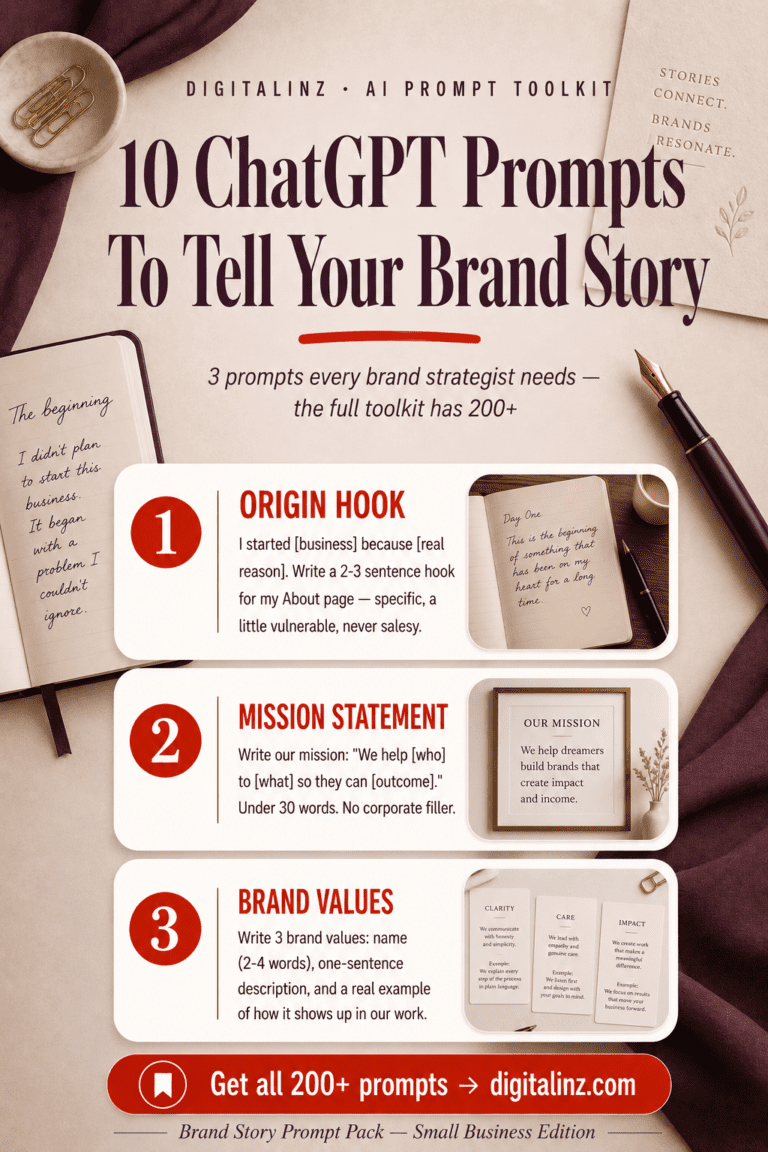
Knowing what to say is half the battle — and that’s exactly what the Brand Story Prompt Pack helps you figure out. It’s got prompts dedicated to About pages, origin stories, and mission statements that actually sound like you wrote them.
Your chronology should highlight the evolution of your product or service. Show how your core values have guided your team over the years. This demonstrates a consistent mission.
| Aspect | Generic Timeline | Impactful Timeline |
|---|---|---|
| Focus | Internal dates and admin events | Customer-centric milestones and solutions launched |
| Visual Design | Plain text list | Icons, images, and clean graphical elements |
| Customer Connection | Shows a company aging | Shows a brand growing to serve them better |
| Outcome | Forgotten information | A memorable marketing asset for your website |
By keeping your history concise, you ensure this page remains a powerful tool. It tells your journey without overwhelming the visitor. To get started, gather your key dates and think from your customer’s perspective.
Leveraging Social Proof Effectively
Trust is the currency of modern commerce, and social proof is its most powerful mint. It shows potential customers that others have already chosen and valued your brand. This evidence turns your website into a credible source.
About 85% of people trust online reviews as much as personal recommendations. This makes them essential for your page. Social proof is a powerful marketing tool that builds immediate trust.
Customer Testimonials
Genuine praise from happy customers is incredibly persuasive. Look at Snapology of Lehi. They feature hundreds of testimonials from parents.
This is a solid way of building trust with new visitors. Always include the reviewer’s name and job title. This adds real credibility to your story.
Displaying Awards & Media Mentions
Recognition from external sources validates your company‘s expertise. A list of awards or press features provides further proof of reliability.
Showcase these honors prominently on your site. They reinforce your core values and mission. This helps people feel confident in choosing your product.
| Type of Proof | Best Use Case | Impact on Visitor Trust |
|---|---|---|
| Customer Testimonials | Showcasing real user experiences and satisfaction. | High emotional connection; feels personal and relatable. |
| Awards & Media Mentions | Establishing industry authority and third-party validation. | Builds professional credibility and perceived expertise. |
| Combined Approach | Creating a comprehensive trust narrative on your page. | Maximum confidence, addressing both emotional and logical decision-making. |
To get started, gather your best reviews and accolades. Integrate them with photos or a short video. This content enriches your brand’s history and journey. It turns casual viewers into convinced supporters.
Balancing Narrative and SEO for Maximum Impact
To truly connect with your audience, your digital presence needs both a heartwarming story and a smart technical foundation. This balance ensures your brand resonates with people while also ranking well in search results.
Keyword Placement Strategies
Your target keywords should flow naturally within your content. Avoid forcing them. Instead, let your story guide their placement.
This approach helps search engines understand your site. It also maintains readability for your customers.
On-page SEO Best Practices
Use clear headers to structure your written content. This improves scannability for visitors.
Always craft a compelling meta title and description for each page. These elements boost click-through rates from search results.
Strategic internal links to your blog posts or press features increase time on site. They also help build trust with readers.
| Aspect | Narrative Focus | SEO Focus |
|---|---|---|
| Primary Goal | Engages emotion and builds connection | Improves visibility and organic reach |
| Content Structure | Flows like a compelling story | Uses headers and keyword clusters |
| Keyword Usage | Natural, contextual placement | Strategic, target-driven placement |
| Outcome | Creates loyal supporters | Attracts qualified traffic |
Balancing these elements ensures your company reaches the right audience. Your mission becomes discoverable to those who value it most.
Writing Authentic and Friendly Content
When your content speaks like a friend, it transforms a simple visit into a meaningful conversation. Remember, 6 in 10 consumers feel companies treat them as a number. Your website can change that perception instantly.
A genuine tone makes your brand relatable. It shows the real personality behind brand operations. This approach builds a bridge directly to your target audience.
Using a Conversational Tone
Write as if you’re talking to a single customer. Use words like “you” and “we” freely. Avoid complex jargon that creates distance.
This makes people feel like they’re engaging with a human team, not a script. Your page becomes a welcoming space for dialogue.
Emotional Language Tips
Choose words that evoke feeling and shared values. Describe your mission with passion that resonates personally.
Authentic communication is the shortest path to a loyal community.
Let your unique personality shine through every sentence. This builds trust and makes your business feel like a true partner.
| Language Style | Corporate Speak | Authentic Voice |
|---|---|---|
| Connection | Feels transactional and distant | Creates a personal, relatable bond |
| Reader Reaction | Views the company as a faceless entity | Sees real people with a compelling story |
| Trust Building | Slow and uncertain | Fast and genuine |
To get started, read your page aloud. If it doesn’t sound like you, revise it. These tips ensure your customers hear a friend, not a corporation.
Your site becomes a reflection of your core identity. This turns visitors into advocates for your brand.
Integrating Calls to Action to Keep Visitors Engaged
A well-placed call to action transforms passive readers into active participants in your brand‘s journey. This strategic element turns your narrative into a pathway for deeper connection.
Look at Mindbody. They offer clear CTAs for both booking classes and offering them. This smart approach attracts a diverse range of users to their website.
A clear action guides your potential customer to the logical next step. This could be shopping, subscribing, or exploring your core product.
Use your page as a tool to draw people deeper into your site. Link directly to your services or portfolio. Avoid treating this space as a blunt sales pitch.
Instead, use a subtle invitation to guide readers toward your best offerings. This maintains the authentic feel of your story.
By integrating a direct call, you keep the momentum going. You turn casual browsers into loyal supporters for your company.
Here are a few tips to get started with effective CTAs:
- Align the action with your core mission and the visitor’s intent.
- Place them naturally within your content flow, not just at the end.
- Use action-oriented language like “Explore Our Services” or “Join Our Community”.
- Test different placements and wording to see what resonates with your target audience.
This list helps ensure your business makes the most of every visitor’s interest. A thoughtful CTA is the bridge between your narrative and their next step.
Ensuring Your About Page Stays Dynamic Over Time
An evergreen profile page acts as a real-time window into your active, thriving operation. It shows your customers that your brand is evolving, not stagnant. This continuous reflection builds deeper trust with everyone who visits your website.
Think of this section as a living document. It should grow alongside your company’s journey. Regular updates prevent your digital presence from feeling like an abandoned storefront.
Tips for Regular Updates
To get started, use resources like Trello or Notion. Schedule quarterly check-ins for your content. This simple action ensures your narrative stays fresh.
Refresh your team photos and company milestones annually. New video clips showcasing recent projects add energy. These updates signal that your enterprise is moving forward.
As your brand evolves, revisit your core values and mission. Ensure they align with your current target audience. This keeps your story relevant and authentic.
Consistent updates are a powerful marketing tool. They maintain the trust you’ve built over the years. Your people will feel like they’re engaging with a current partner.
| Management Style | Update Frequency | Visitor Perception | Trust Level |
|---|---|---|---|
| Static Page | Once at launch | Feels outdated, impersonal | Low; questions activity |
| Dynamic Page | Quarterly reviews | Sees active, growing brand | High; feels current and reliable |
| Proactive Updates | Monthly with new milestones | Views company as industry leader | Maximum; builds advocacy |
By leveraging these resources, you ensure your profile remains a dynamic asset. It accurately reflects the real-time progress of your business journey. This practice shows the personality behind brand decisions.
Keep a list of key updates for your site. Include new product launches and team achievements. Your history becomes a compelling part of your ongoing story.
Conclusion
Crafting a memorable digital introduction is your final step toward lasting customer relationships. A great About Us page is a vital part of your marketing strategy. It builds essential trust and creates a genuine connection with your audience.
Following these tips lets you share a unique brand story. Your company name becomes remembered by your target audience. We provided examples from successful brands like Big Cartel and Canva for inspiration.
Remember, this page is a service to visitors. It gives people the information needed to feel a real bond. Keep your content authentic and regularly updated.
Your core mission will resonate clearly. This practice turns casual browsers into loyal supporters for your business. Your brand’s journey is now ready to inspire.
FAQ
Why do I even need an About Us page for my company?
How can I make my brand’s story stand out to my target audience?
What’s the best way to showcase my team and our personality?
Should I include customer testimonials on my About page?
How do I balance good storytelling with effective SEO on this page?
What kind of call-to-action should I include?
How often should I update my company’s About page?
Your About page is often the first real connection someone makes with your brand. Make it count. The Brand Story Prompt Pack helps you write it with clarity and heart — so visitors turn into customers because they felt something when they read your story.