
How to Write Your Brand Story with AI Step by Step
Did you know that only 28% of managers can accurately identify their company’s top strategic priorities? This surprising statistic from the MIT Sloan School highlights a common issue in business today: the disconnect between strategy and storytelling.
In a world where effective communication is key, understanding how to shape your narrative is essential. A compelling story can not only define your brand but also resonate deeply with your audience. While technology offers tools to assist in this process, the heart of your message still requires a human touch.
This guide will explore innovative ways to leverage machine learning and other platforms. By doing so, you can save time while ensuring that your content reflects your unique values and purpose. Join us as we delve into storytelling techniques that can elevate your marketing strategy and create memorable experiences for your customers.
Key Takeaways
- Understanding your brand is crucial for effective storytelling.
- Technology enhances but does not replace the human element in storytelling.
- Machine learning can streamline content creation while maintaining authenticity.
- Platforms and capabilities help reach your audience effectively.
- Analyzing storytelling methods can improve customer experiences.
Introduction to Brand Storytelling and AI
Effective communication is often a missing link in many business strategies today. Understanding the power of a compelling narrative can set your brand apart. Brand storytelling connects with your audience, conveying your purpose, values, and personality. This emotional connection evokes empathy and fosters loyalty.
Generative AI is transforming the storytelling landscape. This technology learns from existing data to create text, images, and more. It can save you time while maintaining your unique voice. When you use AI as a partner, you can craft marketing ideas that resonate across social media platforms.
A strong brand story allows customers to see themselves at the center of the experience. This connection is vital for growth and loyalty in today’s competitive market.
| Aspect | Importance | AI’s Role |
|---|---|---|
| Emotional Connection | Fosters loyalty | Enhances narrative creation |
| Audience Engagement | Drives interaction | Personalizes content |
| Brand Identity | Defines purpose | Assists in consistency |
how to write your brand story with AI
A compelling narrative can significantly enhance your marketing strategy. To effectively connect with your audience, it’s essential to follow some key steps. These steps will guide you in shaping a narrative that resonates.
First, define your values and objectives. These act as a compass for your business, ensuring consistency in your marketing efforts. Next, leverage AI tools to analyze social media mentions and customer feedback. This insight will help you understand how your audience perceives your narrative.
Develop a narrative framework using AI-generated ideas. Once you have this framework, refine the copy to ensure it aligns with your unique voice. For instance, using tools like Grammarly can help you maintain grammatical accuracy while staying true to your brand’s tone.
Combining AI with human creativity enables you to produce high-quality stories efficiently. This approach can save you a lot of time, allowing you to focus on crafting an immersive experience for your audience.

| Step | Description | Benefit |
|---|---|---|
| Define Values | Establish core principles | Guides marketing consistency |
| Analyze Feedback | Use AI for insights | Understand audience perception |
| Develop Framework | Create narrative structure | Streamlines storytelling process |
| Refine Copy | Ensure alignment with voice | Enhances authenticity |
| Combine Creativity | Merge AI and human input | Improves story quality |
Leveraging AI Tools and Technology for Storytelling
In today’s digital age, the tools you use can transform your storytelling efforts. Brands are increasingly adopting innovative technologies to enhance their narratives and engage audiences effectively.
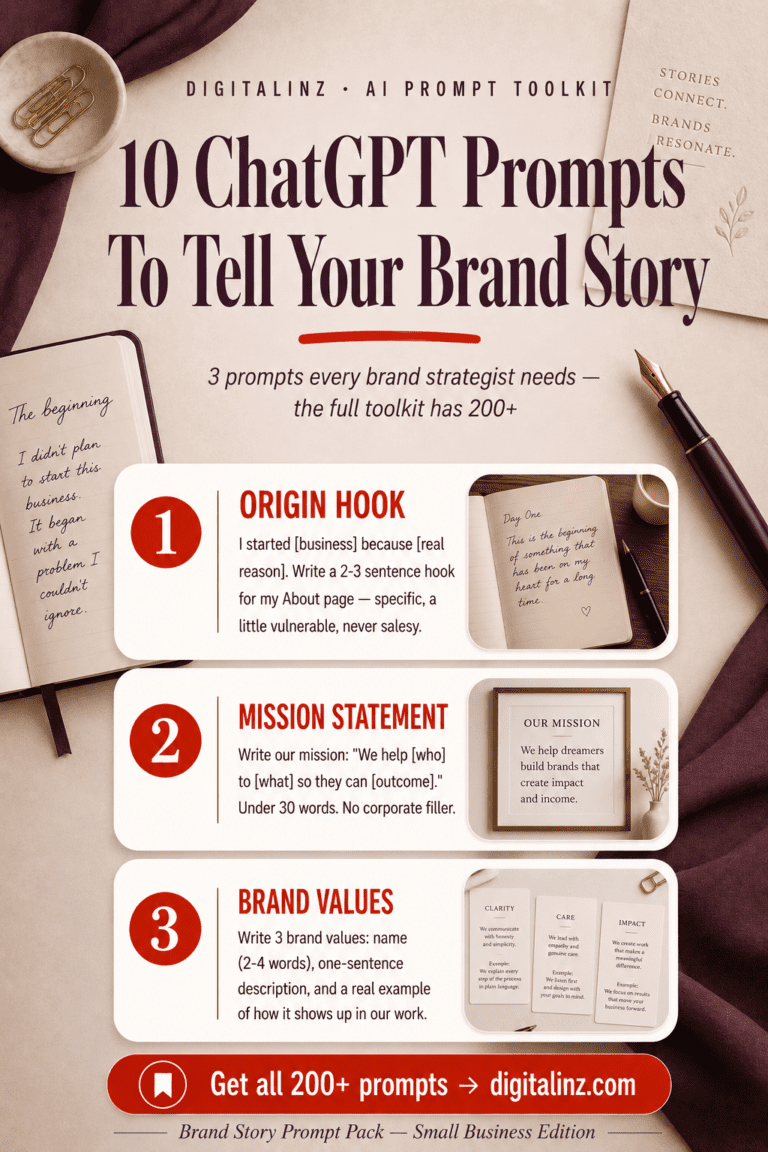
Writing your brand story and marketing copy doesn’t have to drain you. The Brand Story Prompt Pack gives you step-by-step ChatGPT prompts to tell your story, write your pages, and attract the right customers — fast.
Popular platforms like ChatGPT, Gemini, and Midjourney offer capabilities that assist in researching and creating visual content. These tools empower you to craft compelling narratives that resonate with your audience.
For instance, Amazon utilizes AI to power its recommendation system, suggesting products based on customer behavior. Similarly, Nike’s Fit app enhances the customer experience by scanning feet to recommend the best shoe size.
Coca-Cola leverages AI for marketing campaigns, gathering consumer insights to tailor content effectively. By using AI for social media analysis, you can gauge public sentiment and adapt your strategy accordingly.
These advanced tools allow you to customize content for various platforms, ensuring your message reaches the right customers at the right time.
Maintaining Authenticity and a Human Touch
In a world increasingly driven by technology, the essence of storytelling remains rooted in human experience. Authenticity is key to connecting with your audience. Your brand story should reflect your core values and purpose, ensuring it resonates deeply.
According to Deloitte’s “Technology Trust Ethics Report,” the primary concern when using AI is the privacy and security of consumer data. This highlights the need for transparency in your narrative. Your story must originate from the heart of your business, emphasizing the human voice that defines your organization.
The Importance of Values, Purpose, and Voice
AI cannot empathize with human emotions. Therefore, it is crucial to balance automation with a human touch. This balance allows you to connect genuinely with your audience. When sharing your story, demonstrate that you understand them, fostering a deeper relationship.
Balancing Automation with Empathy in Your Narrative
Maintaining authenticity means your narrative should not solely rely on existing data. Instead, it should reflect your unique truth. By prioritizing your values and purpose, your marketing remains a genuine reflection of who you are, rather than just automated content.

Integrating AI Insights into Your Brand Strategy
As businesses evolve, integrating insights from AI can be a game-changer for your marketing approach. The MIT CIO Generative AI report emphasizes that broader AI accessibility opens up exciting new possibilities for data-driven audience analysis and personalization.
Utilizing AI tools allows you to adapt your narrative across various platforms. By analyzing customer behavior, you can tailor your marketing strategy effectively. This ensures that your content resonates with your audience, enhancing their overall experience.
Personalization engines play a crucial role in this process. They analyze customer data to provide unique experiences on websites and in emails, significantly enhancing customer engagement. By incorporating these insights into your business strategy, you drive meaningful growth.
| AI Capability | Application | Benefit |
|---|---|---|
| Data Analysis | Understand customer behavior | Enhances targeting |
| Personalization | Tailor content for users | Improves engagement |
| Predictive Analytics | Forecast customer needs | Optimizes offerings |
| Multi-Platform Adaptation | Share stories across channels | Increases reach |
| Continuous Learning | Refine strategies over time | Ensures relevance |
A great company narrative can evolve, incorporating new examples and insights. This adaptability ensures that your vision remains relevant and engaging.
Conclusion
In an era where storytelling is pivotal, embracing technology can elevate your message. AI serves as a valuable partner, enhancing your narrative while preserving the essential human connection. Remember, technology is a tool that complements the creativity and empathy your team brings to the table.
By collaborating with human insight and leveraging innovative tools, your brand can remain authentic and resonate deeply with your audience. As you adapt and learn, your brand will thrive alongside emerging technologies, reaching more people than ever before.
Always prioritize your unique voice and values. This approach ensures that your narrative stands out in a crowded media landscape, fostering genuine connections with your audience.
FAQ
What is the importance of a brand story?
A brand story helps connect with your audience on an emotional level, building trust and loyalty. It communicates your values and purpose, making your brand memorable.
How can AI enhance storytelling?
AI can analyze data to identify trends and preferences, helping you craft tailored narratives that resonate with your audience. It also streamlines content creation, saving time and resources.
What tools can I use for AI-driven storytelling?
Popular platforms like Jasper, Copy.ai, and Writesonic offer various capabilities for generating content and insights, making it easier to create engaging stories for your brand.
How do I maintain authenticity while using AI?
Ensure your values and voice shine through by combining AI-generated content with your unique perspective. Balance automation with personal touches to keep your narrative relatable.
Can AI help with social media content?
Yes, AI can analyze audience engagement and preferences, enabling you to create customized social media posts that resonate with your followers and enhance your brand presence.
How do I adapt my brand story across different platforms?
Tailor your narrative for each platform by considering the audience and format. Use AI insights to adjust your messaging while keeping core values consistent across channels.
Writing your brand story doesn’t have to start with a blank page. The Brand Story Prompt Pack gives you step-by-step AI prompts to uncover your why, craft your narrative, and speak directly to the people you’re meant to serve.