ChatGPT SOAP note template therapist for your practice
Did you know that clinicians spend nearly 50% of their time on administrative tasks? This staggering statistic highlights the challenges faced in the mental health field. With increasing demands, finding efficient ways to manage clinical documentation is essential.
Leveraging a ChatGPT SOAP note template can help you streamline your daily tasks while maintaining high standards in your practice. Many professionals are exploring how artificial intelligence can ease the burden of documentation that often follows lengthy sessions with clients.
This guide will help you learn how to safely incorporate AI tools into your workflow, enhancing the quality of your patient care records. While AI can assist in drafting notes, remember that the ultimate responsibility for accuracy lies with you.
We will also discuss balancing modern technology’s efficiency with the strict privacy requirements mandated by HIPAA. By the end of this article, you will have a comprehensive roadmap for integrating smart technology into your routine without compromising the integrity of your clinical notes.
Key Takeaways
- AI tools can significantly reduce the time spent on documentation.
- Understanding the balance between efficiency and privacy is crucial.
- Incorporating technology can enhance patient care records.
- Accuracy in documentation remains the clinician’s responsibility.
- This guide offers practical steps for using AI effectively.
Understanding the Importance of SOAP Notes in Therapy
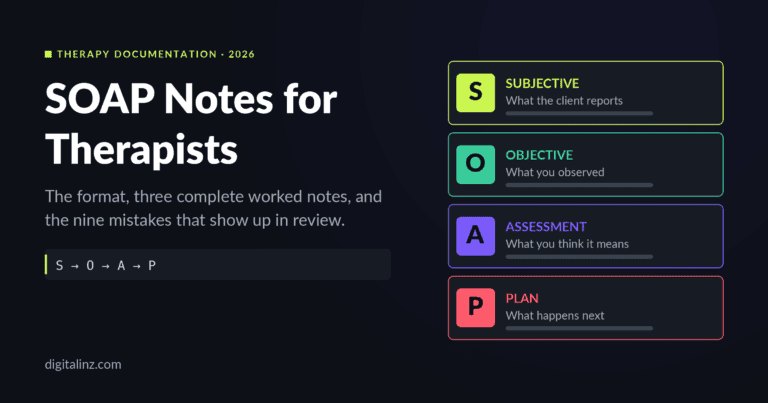
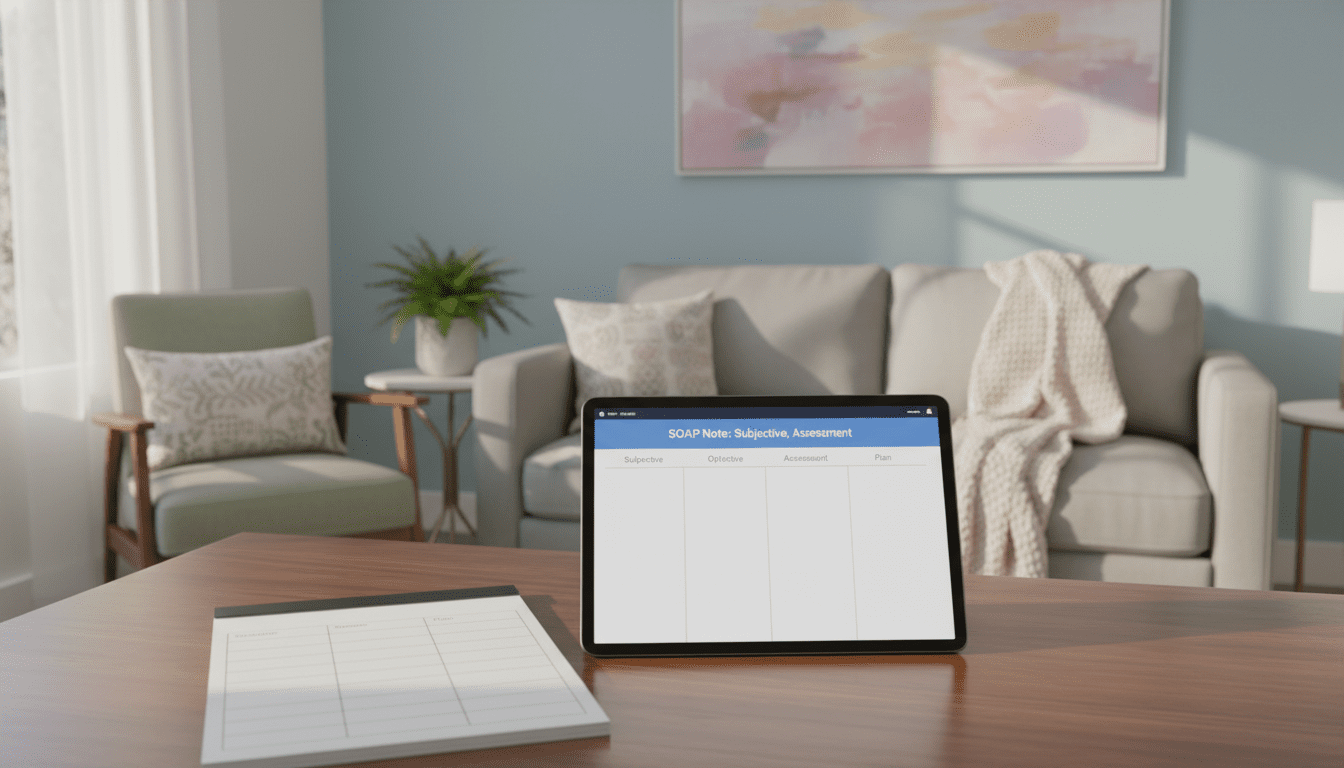
In the world of therapy, effective documentation is not just important; it’s essential. SOAP notes provide a structured method for recording patient information. This method stands for Subjective, Objective, Assessment, and Plan, allowing clinicians to organize complex data efficiently. Our complete guide to SOAP notes for therapists works through all four sections with full example notes.
According to the California Association of Marriage and Family Therapists, these notes are vital records of treatment during each session. They help ensure that care is documented clearly, supporting continuity across various healthcare providers.
Proper documentation of a patient’s progress is crucial for maintaining high standards in mental health treatment. When therapists create these notes, they establish a legal record that justifies the medical necessity of the services provided.
By adhering to this standardized format, professionals can ensure their assessments are consistent and easy for others to review. This effective documentation also aids in tracking long-term patient progress, ensuring treatment plans align with evolving needs and goals.
| Component | Description | Importance |
|---|---|---|
| Subjective | Patient’s reported symptoms and feelings | Provides insight into the patient’s perspective |
| Objective | Clinician’s observations and measurable data | Offers factual information for assessments |
| Assessment | Clinician’s interpretation of the subjective and objective data | Guides treatment decisions and planning |
| Plan | Next steps in treatment and interventions | Ensures clarity in future care |
Benefits of Integrating AI in Your Note-Taking Process
The integration of AI in therapy can transform how clinicians document patient interactions. By utilizing advanced tools, you can enhance both efficiency and accuracy in your practice.
Using a specialized tool like Skriber allows you to capture ambient audio during a session. This significantly reduces the time spent on manual documentation, freeing you to focus on your client.
AI-powered tools can turn raw information into structured notes. This ensures that the accuracy of your clinical records is maintained throughout the day.
Automating the drafting process enables you to prioritize patient care over administrative tasks. As a result, you can manage session data more effectively, leading to improved treatment outcomes.
Moreover, many clinicians find that AI helps organize their assessments. This makes it easier to identify patterns in a client’s mental health journey.
By reducing documentation time, you can either see more clients or enjoy a better work-life balance. These advanced tools support you by providing a clear structure that simplifies writing SOAP notes.
Getting Started with the ChatGPT SOAP note template therapist
Starting your journey with AI in clinical documentation can be both exciting and daunting. To effectively utilize a ChatGPT SOAP note template, it’s crucial to prioritize patient privacy. Always ensure that you are working with de-identified information to protect sensitive data.
Setting up your AI environment means creating a secure space. This space should allow you to practice drafting notes without inputting any real protected health information. Treat this tool as a learning assistant that helps structure your assessments and plans for hypothetical therapy sessions.
By practicing with dummy data, you can refine your documentation skills. This practice will help you learn to write more concise notes for your actual practice. Remember, this tool is not meant for storing or processing real patient data.
You can use the AI to generate templates that help organize the information gathered during a session. This ensures your progress notes remain consistent. Establishing a clear workflow for your documentation will save you time and help maintain the high quality of care your clients expect.
Decoding the SOAP Note Structure: Subjective, Objective, Assessment, and Plan
Understanding the components of SOAP notes is crucial for successful treatment documentation. Each part of this structure plays a vital role in capturing the patient’s journey through therapy.
The Subjective section focuses on the client’s own narrative. It includes their primary concerns and feelings during the therapy session. This personal perspective is essential for understanding their emotional state.
In the Objective section, clinicians record observable data. This includes the patient’s appearance, mood, and specific behaviors noted during the visit. These facts help provide a clearer picture of the client’s condition.
The Assessment component requires therapists to synthesize the information gathered. This synthesis forms a professional clinical impression of the patient’s current state, guiding future treatment.
Finally, the Plan section outlines future treatment steps. This includes interventions, homework, or referrals needed to support the patient’s mental health progress. Mastering this format ensures your notes provide a clear account of care provided during each session.
| Component | Description | Purpose |
|---|---|---|
| Subjective | Client’s reported feelings and concerns | Captures the client’s perspective |
| Objective | Clinician’s observations and measurable data | Provides factual information |
| Assessment | Clinician’s interpretation of the data | Guides treatment decisions |
| Plan | Future treatment steps and interventions | Ensures clarity in care |
How ChatGPT Improves Clinical Documentation
Imagine cutting down the hours spent on paperwork while improving your documentation quality. AI tools can effectively transform your rough bullet points into comprehensive clinical notes. This is a major time-saver for busy mental health professionals.
This process allows you to focus on the content of the session while the AI handles formatting the information correctly. By using this tool, you can ensure that your documentation remains professional and consistent, even when you are feeling tired after a long day.
It is important to review every note generated by the AI. This ensures that the assessment and plan accurately reflect the patient’s unique situation. This method of documentation helps you avoid writer’s block by providing a clear starting point for your progress notes after each therapy session.
While the AI provides the structure, you must always add the specific clinical judgment required to make the note meaningful and accurate. Integrating this technology into your practice can significantly improve the quality of your records while reducing the time spent on administrative tasks.
| Feature | Benefit | Impact on Practice |
|---|---|---|
| Time-saving | Reduces paperwork burden | More time for patient care |
| Consistency | Maintains professional standards | Improves documentation quality |
| Structure | Organizes information effectively | Facilitates easier review |
Step-by-Step Guide to Creating an Effective SOAP Note
Effective documentation practices can significantly enhance your clinical efficiency. To create a solid SOAP note, start by organizing your session details. Include the date, the client’s name, and the primary concerns discussed during the session.
Next, personalizing the note for each client is crucial. Generic documentation can weaken the credibility of your records during a clinical review. Aim to complete your progress notes within 24 to 48 hours of the session. This ensures that all the information remains fresh and accurate.
When writing the assessment, include specific examples of the patient’s behavior that support your clinical conclusions. The plan section should be actionable, detailing the specific interventions and goals agreed upon for future sessions.
By following this step-by-step guide, you can ensure that your documentation meets the high standards required by insurance companies and regulatory bodies. Remember, your notes reflect your professional judgment, so take the time to make them clear and meaningful.
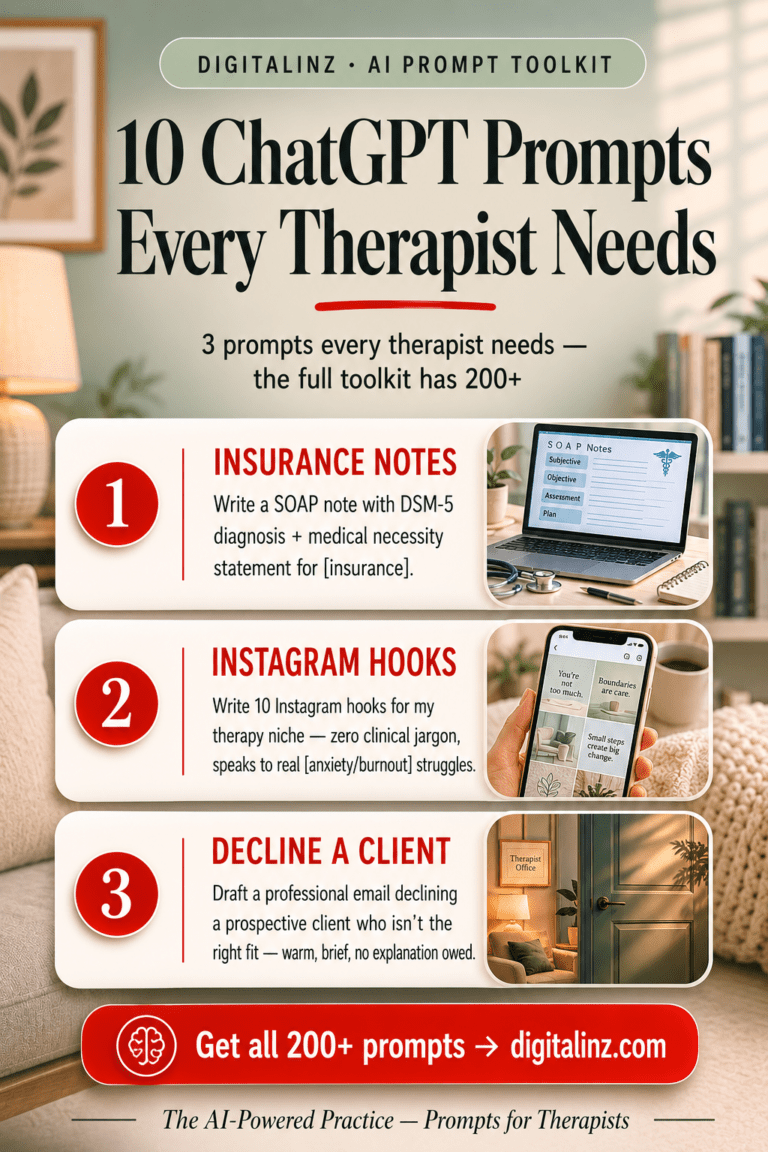
If administrative work is eating into your clinical hours, you’re not alone. The AI-Powered Practice gives you prompts built for therapists — so session notes, treatment plans, and client prep take minutes instead of hours.
Incorporating HIPAA Compliance into Your AI Workflow
Navigating the complexities of HIPAA compliance is vital for any clinician using technology in mental health. To ensure your practice remains within legal boundaries, it is essential to prioritize patient privacy.
You must never enter real patient data into AI tools, as they may not be HIPAA compliant. This poses a significant legal risk to your license and could jeopardize your practice.
Safe handling of data means only using completely de-identified or synthetic information when practicing with AI-generated templates. Understanding the legal risks associated with data breaches is essential for protecting both your clients and your professional reputation.
Because many AI tools do not offer a Business Associate Agreement, they cannot be used to store or process any information that could identify a patient. Always ensure that your documentation process follows the strict privacy standards required by federal law.
If you need to use AI for real patient notes, select a platform specifically built for healthcare that offers full HIPAA compliance. This will help maintain the trust of those you treat while enhancing your documentation process.
Practical Exercises for Enhancing Your Note-Taking Skills
Mastering the art of structured documentation can transform your approach to patient care. Engaging in practical exercises is a great way to refine your skills.
You can use AI tools to generate sample scenarios. This helps you practice writing structured notes without the pressure of real patient information. Regular practice can make you more efficient at documenting your sessions.
Consider creating a cheat sheet of common interventions you use. This can help you write more consistent progress notes.
These exercises are also a safe way for new clinicians to build confidence in their documentation style. You can ask the AI for feedback on the clarity of your sentences, which improves your writing quality.
Consistent practice with these tools will help you develop a natural and efficient way of documenting the complex work you do with clients.
| Exercise | Description | Benefit |
|---|---|---|
| Scenario Generation | Use AI to create sample cases | Refines note-taking skills |
| Cheat Sheet | Compile common interventions | Enhances consistency in notes |
| Feedback Requests | Ask AI for clarity on sentences | Improves writing quality |

Overcoming Common Challenges in Therapy Documentation
Documenting therapy sessions presents unique challenges that every clinician must navigate. One major issue is avoiding generic or overly broad notes that fail to capture the unique needs of the client.
When you rely too heavily on AI-generated text, you risk creating records that do not accurately reflect the specific progress made during a session. To overcome these issues, always take the time to personalize your notes with specific details about the interventions and the patient’s response.
Generic documentation can pose a legal risk if your records are ever audited, as they may not demonstrate the medical necessity of the treatment provided. By focusing on observable facts and specific clinical observations, you can ensure that your notes remain high-quality and legally defensible.
Remember that your documentation is a vital part of the care process, and it should clearly communicate the value of the therapy you provide. If you find yourself struggling with documentation, consider using a tool that prompts you to include the most important details for each session.
Integrating AI Tools Seamlessly into Your Practice
Seamlessly integrating AI into your practice can elevate both your documentation and patient interactions. To achieve this, you must adopt a thoughtful approach that ensures your workflow remains efficient and secure.
Since AI tools cannot connect directly to your EMR or EHR, you must be cautious when copying and pasting information into your records. A better strategy is to use AI as a drafting tool for your notes, followed by a thorough review within your secure system.
Establishing a consistent routine for your documentation will help minimize the time spent on administrative tasks while maintaining high standards of care. Always prioritize the security of your patient data by ensuring that no identifiable information is shared with non-compliant platforms.
Successful workflow integration means balancing technology’s time-saving benefits with the essential human touch in your practice. As you grow more comfortable with these tools, they will become invaluable assets in managing the demands of your clinical work.
Analyzing Real-World Examples of AI-Enhanced SOAP Notes
Insights from real-life examples can demonstrate the impact of effective note-taking in therapy. Consider the case of John Smith, a 7-year-old boy with an articulation disorder. His structured notes track his progress in speech therapy effectively.
For Emily Johnson, a 32-year-old with Major Depressive Disorder, a well-documented SOAP note provides a clear roadmap for her ongoing treatment plan. This approach ensures that her care is both consistent and targeted.
In the case of Robert Davis, a 58-year-old with hypertension, documentation must include vital signs and medication adherence. This is crucial for ensuring patient safety and effective treatment.
Lastly, for 5-year-old Lily Martinez, who has Acute Otitis Media, the note highlights the importance of documenting physical exam findings and follow-up instructions. These examples illustrate how different specialties can use structured formats to capture the most relevant information for their clinical needs.
By reviewing these templates, you can learn to write more effective notes that clearly communicate the care provided to each individual client. Always remember that these examples are for educational purposes and should be adapted to fit the specific requirements of your own practice.
Customizing Your ChatGPT SOAP note template therapist for Specific Therapy Needs
Tailoring your documentation tools to fit the unique needs of your practice can greatly enhance your efficiency. Customizing your SOAP note template allows you to adapt the structure to meet the specific requirements of your mental health practice.
You can create custom templates that include common interventions, such as cognitive-behavioral therapy techniques or specific goals for your individual clients. By pre-loading your template with these details, you save time during the documentation process and ensure that your notes remain consistent and thorough.
Specialized treatments often require unique documentation. Therefore, having a flexible template that you can adapt is a major advantage for any clinician. You can also include sections for tracking specific symptoms or progress markers relevant to the type of therapy you provide.
Remember to keep your custom templates simple and easy to use, so they don’t become a burden during your busy clinical day. As your practice grows, you can continue to refine these templates to better reflect the evolving needs of the clients you serve.
| Customization Aspect | Description | Benefit |
|---|---|---|
| Interventions | Incorporate specific therapy techniques | Enhances relevance to client needs |
| Progress Tracking | Include sections for symptom tracking | Facilitates better treatment outcomes |
| Template Flexibility | Adapt to various therapy types | Improves documentation efficiency |

Ensuring Legal and Ethical Standards in Your Documentation
Navigating the legal and ethical landscape of documentation is crucial for effective therapy practices. Ensuring legal and ethical standards in your documentation is the foundation of a responsible and professional mental health practice.
Balancing the efficiency of AI tools with the strict requirements of HIPAA compliance is a challenge that every modern clinician must navigate carefully. Your notes must reflect the highest standards of integrity, demonstrating the medical necessity of your services.
Balancing Efficiency with Compliance
To meet federal documentation standards, you must complete notes within 24 to 48 hours. This is particularly important for Medicare and Medicaid providers. Always stay informed about the specific requirements set by your state and insurance providers.
Best Practices for Ethical Record-Keeping
- Your notes are a permanent record of the care you provide, so they should always be written with the highest level of professionalism.
- If you are ever in doubt about the ethical implications of your documentation, consult with your professional association or a legal expert in healthcare.
- By prioritizing these standards, you protect your clients, your practice, and your professional license from potential legal and ethical issues.
| Best Practice | Description | Importance |
|---|---|---|
| Timeliness | Complete notes within 24-48 hours | Meets federal standards |
| Accuracy | Ensure notes are precise and clear | Supports treatment necessity |
| Consultation | Seek advice when unsure | Enhances ethical compliance |
Conclusion
Effective documentation is the backbone of successful therapy practices. Integrating a SOAP note tool into your workflow can greatly enhance your efficiency while adhering to strict privacy standards. Always remember that AI serves as a support for your professional judgment, not a substitute for the critical thinking required in mental health care.
By maintaining compliance with HIPAA and focusing on high-quality documentation, you ensure the best outcomes for every patient. We have explored how to balance the advantages of modern technology with the essential legal and ethical requirements of your practice.
As you move forward, refine your documentation skills and stay updated on the latest developments in healthcare technology. Your commitment to accurate and ethical record-keeping is vital for providing excellent therapy and supporting your clients’ long-term progress.
Thank you for taking the time to learn how to enhance your practice while protecting the sensitive information entrusted to you by your clients.
FAQ
What are SOAP notes and why are they important?
SOAP notes are a structured way to document client interactions in therapy. They help ensure that all relevant information is captured, making it easier to track progress and plan future sessions.
How can I improve my documentation skills?
You can enhance your documentation skills by practicing regularly, utilizing templates, and seeking feedback from colleagues. Engaging in training sessions can also be beneficial.
What role does AI play in note-taking for therapists?
AI can streamline the note-taking process by providing suggestions and organizing information efficiently. This allows you to focus more on your clients and less on paperwork.
How do I ensure my notes are HIPAA compliant?
To maintain HIPAA compliance, ensure that all client information is stored securely, use de-identified data when possible, and follow best practices for confidentiality.
Can I customize my notes for different therapy styles?
Yes, you can tailor your notes to fit various therapeutic approaches by adjusting the content and structure to reflect the specific needs of each client or treatment modality.
What are common challenges therapists face with documentation?
Common challenges include time constraints, maintaining accuracy, and avoiding generic notes. Addressing these issues can lead to better client outcomes and improved documentation quality.
How can I make my notes more detailed and comprehensive?
To enhance the detail in your notes, focus on specific observations, include client quotes, and summarize key points from the session. This will provide a clearer picture of the client’s progress.
What are best practices for ethical record-keeping?
Best practices include maintaining confidentiality, regularly reviewing and updating records, and ensuring that documentation is accurate and reflective of the therapy process.
Writing SOAP notes doesn’t have to drain your evenings. The AI-Powered Practice gives you ready-to-use prompts for session documentation, treatment plans, and client prep — so you can spend less time on paperwork and more time on what matters most.