
How ChatGPT for progress notes mental health helps you
Did you know that over 70% of mental health professionals report spending more than half their time on documentation? This staggering statistic highlights the challenge many clinicians face in balancing patient care with administrative tasks.
Since its release in November 2022, OpenAI’s innovative tool has begun to transform how therapists manage their daily documentation. By leveraging advanced language models, you can streamline your practice, allowing you to focus more on what truly matters: your patients.
However, while this technology offers remarkable benefits, it also comes with risks. Understanding how to navigate these tools safely is crucial, especially when dealing with sensitive patient information. This guide will explore how to effectively use AI for documentation while emphasizing the importance of compliance with healthcare regulations.
By the end of this article, you will have actionable insights to enhance your practice and improve patient care.
Key Takeaways
- AI tools can significantly reduce the time spent on documentation.
- Understanding compliance is essential for protecting patient data.
- Specialized models can improve the accuracy of your notes.
- Real-world examples show how clinicians benefit from these systems.
- Integrating secure tools into your workflow enhances overall care.
Understanding the Role of AI in Mental Health Documentation
Many clinicians find themselves overwhelmed by the amount of time they dedicate to paperwork. Since OpenAI released its innovative tool in November 2022, the landscape of clinical documentation has shifted significantly. This change has prompted professionals to rethink their administrative workflows.
These advanced language models analyze vast amounts of text data, enabling therapists to draft notes more efficiently. However, while these tools can generate human-like text, they often lack the specialized training needed to handle sensitive patient information accurately.
As technology evolves, it is crucial to remain aware of the risks associated with using non-compliant systems. Ensure that any AI tool you select for your therapy notes is designed specifically for healthcare providers. By understanding how these models function, you can better choose software that supports your clinical judgment while maintaining the integrity of your treatment records.
The Benefits of Using ChatGPT for Therapy Notes
Clinicians frequently find that administrative tasks take away from their primary focus: patient care. Using AI tools can enhance efficiency and consistency in your documentation. This ensures that your notes meet the high standards set by insurance companies and regulatory bodies.
According to the California Association of Marriage and Family Therapists (CAMFT), progress notes should be brief written records that capture essential treatment aspects. By utilizing AI, you can create these notes more consistently and accurately.
For therapists who may not be native English speakers, AI language models serve as a valuable resource. They help bridge communication gaps and produce clear, professional documentation.
Streamlining your workflow means you can dedicate more time to your clients during each session. However, it’s essential to remain vigilant about the risk of data exposure when using general-purpose AI for sensitive clinical information.
By developing a structured approach to your documentation, you ensure that each note reflects your unique clinical style while remaining compliant with legal standards.
How ChatGPT for progress notes mental health Enhances Your Documentation
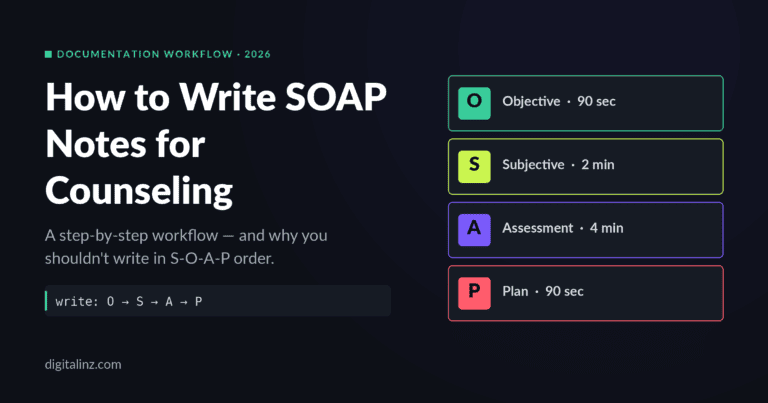
Documentation demands can create hurdles for clinicians striving to prioritize patient engagement. When you use AI tools, you can quickly transform raw session thoughts into structured clinical documentation that follows standard formats like SOAP.
This process helps you maintain a consistent approach to your records, which is vital for demonstrating medical necessity to insurance providers during audits or reviews. By automating the initial drafting phase, you save valuable time that can be redirected toward professional development or improving your work-life balance.
It is essential to review every piece of AI-generated text to ensure it accurately reflects the specific interventions and observations you made during the therapy session. While these tools are helpful, they cannot replace your clinical judgment, which remains the most important factor in providing high-quality care to your patients.
Many therapists report that using AI to organize their notes helps them conceptualize their clients’ progress more effectively over the course of their treatment. As you refine your use of these tools, your documentation will become a more reliable resource for tracking long-term patient outcomes.
Ethical and Legal Considerations in AI-Powered Therapy Notes
The growing reliance on technology in therapy has raised important questions about ethics and patient privacy. Understanding the legal landscape is essential for every clinician. This includes adhering to the Health Insurance Portability and Accountability Act (HIPAA), which sets strict standards for protecting patient data.
Using AI tools can streamline documentation, but it’s crucial to evaluate their compliance with privacy regulations. Ensure that any tool you choose offers end-to-end encryption and business associate agreements to safeguard sensitive information.
Balancing the efficiency of these systems with your clinical judgment is vital. Ethical guidelines dictate that you must maintain patient confidentiality, even when utilizing advanced software. Always prioritize your patients’ safety and trust over convenience.
| Consideration | Description | Importance |
|---|---|---|
| HIPAA Compliance | Ensures patient data is protected | Legal requirement for all healthcare providers |
| Data Encryption | Protects sensitive information from breaches | Maintains patient trust and confidentiality |
| Clinical Judgment | Involves interpreting AI-generated data | Critical for accurate treatment planning |
Integrating AI into Your Clinical Workflow
As the landscape of therapy evolves, embracing AI tools can significantly enhance your workflow. A recent survey by SimplePractice revealed that 50% of clinicians now use AI for daily administrative tasks, improving their overall efficiency.
To successfully integrate these tools, start by identifying one specific task. For example, you might begin with drafting treatment plan templates. Once you feel comfortable, you can expand to other areas.
Creating clear templates for your AI to follow will help maintain a consistent structure across all documentation. Additionally, consider using integrations like Zapier to connect your AI tools with existing practice management systems.
By gradually training the system with your feedback, you can teach the AI to better match your unique writing style. Remember, the goal is to handle predictable paperwork so you can remain fully present during therapy sessions.
Many therapists find that starting with a single, low-risk task builds confidence in the technology. As you become more comfortable, explore how these systems can support your practice growth and help manage your time more effectively each week.

Optimizing Your Documentation Process with AI Tools
In the fast-paced world of therapy, efficient documentation is essential. Leveraging AI tools can significantly streamline your documentation process. By generating templates that reflect your clinical approach, you can better meet the needs of your patients.
However, it’s crucial to remember that you must always review and edit the AI-generated content. While these models can be incredibly helpful, they may sometimes produce inaccuracies. “Your clinical judgment is irreplaceable.” Always ensure that the details captured in your notes are accurate and reflect the true essence of each session.
Automation techniques, like voice-to-text software, can help you document session details immediately. This not only saves time but also allows you to focus on patient care. Many therapists find these tools invaluable for summarizing client histories or generating progress reports.
Balancing automation with meaningful storytelling about your patients’ journeys is vital. Regularly auditing your documentation process can help you identify areas where AI can provide the most value without compromising your professional standards.
If administrative work is eating into your clinical hours, you’re not alone. The AI-Powered Practice gives you prompts built for therapists — so session notes, treatment plans, and client prep take minutes instead of hours.
Comparing General-Purpose ChatGPT with Specialized Note-Takers
As technology advances, many therapists are exploring different tools to enhance their documentation process. While a subscription to ChatGPT Plus costs $20 per month and provides powerful language generation, it is not specifically designed for healthcare settings. This is a critical distinction to consider.
Specialized note-takers come equipped with HIPAA-compliant safeguards. These ensure that your patient data remains protected and encrypted throughout the documentation process. In contrast, general-purpose models may struggle with specific therapeutic terminology, which can lead to inaccuracies in your notes.
It’s essential to weigh the long-term risks of using non-compliant systems. Data breaches can have severe consequences for your practice. Specialized software often includes features like automated intake forms and treatment plan tracking, which general-purpose tools cannot provide.
By selecting a tool tailored for healthcare professionals, you ensure that your documentation meets the specific requirements of insurance companies and state regulations. Many clinicians find that investing in specialized software saves time and provides peace of mind regarding patient privacy.
| Feature | General-Purpose Tools | Specialized Note-Takers |
|---|---|---|
| Compliance | Not HIPAA-compliant | HIPAA-compliant |
| Terminology Accuracy | May struggle with clinical terms | Trained on clinical language |
| Additional Features | Limited functionality | Includes intake forms and tracking |
Real-World Success Stories in Time-Saving Documentation
Imagine slashing your note-writing time dramatically, allowing you to focus more on patient care. Many clinicians have experienced significant time savings through innovative tools designed for documentation.
For instance, Matthew Hitchcock, MD, a family physician in Tennessee, reported that AI assistance reduced his documentation time from two hours to just twenty minutes per case. Similarly, mental health professionals using Mentalyc take only three minutes to write each progress note, compared to the usual 15 to 20 minutes for manual writing.
These success stories demonstrate how technology can eliminate documentation backlogs. Clinicians feel more motivated and less exhausted at the end of their days. By reclaiming hours each week, therapists can dedicate more time to professional development, personal well-being, or seeing additional clients in their practice.
One clinical psychologist shared that she saved several hours weekly by using automated systems to handle appointment reminders and post-session resource recommendations for her patients. These real-world results highlight the potential for AI to transform the administrative burden into a streamlined aspect of your daily clinical practice.
When you see how other professionals have successfully implemented these tools, it becomes easier to envision a more efficient future for your own office. Always remember that the primary goal of these time-saving measures is to enhance the quality of care you provide to every individual you treat.
Best Practices for Secure and Compliant Information Handling
In today’s digital age, the importance of secure information handling cannot be overstated. As a clinician, you must prioritize the safety of your patient data. This commitment not only protects your practice but also builds trust with your clients.
To ensure your data meets HIPAA standards, consider the following:
- Use platforms that provide business associate agreements and robust encryption for all stored patient information.
- Never input identifiable patient details into public AI models, as these systems may use your data to train future versions of their language models.
- Regularly audit your digital systems to ensure that all security protocols are up to date and that you are following the latest guidelines for healthcare data.
- Implement strong passwords and enable multi-factor authentication for accounts containing sensitive clinical documentation.
- Educate your staff on the importance of secure information handling to prevent accidental breaches.
- If unsure about a specific tool’s compliance, consult with a legal expert or cybersecurity professional.
- Maintaining a secure environment is a legal requirement and a fundamental part of building trust with your patients.
- By prioritizing security, you create a safe space where clients feel comfortable sharing their most personal thoughts during therapy.
Enhancing Your Clinical Judgment with AI Assistance
Using AI tools in therapy can transform the way you document and reflect on your sessions. Benjamen Saenz, a Licensed Professional Counselor, notes that the clinical accuracy of AI-generated notes is fantastic and helps him enjoy his job much more.
Sophia Bakker, a Temporary Licensed Professional Counselor, feels that her AI tool acts like a mini supervisor, helping her conceptualize her clients better. This assistance provides different perspectives, enhancing your awareness during complex clinical cases.
By reflecting on your sessions with these tools, you can improve your ability to identify patterns and track progress over the course of treatment. It is important to remember that AI should augment your clinical judgment, not replace the human empathy and connection that are fundamental to therapy.
Many therapists find that having an AI partner helps them stay objective, especially when dealing with challenging or emotionally draining sessions. As you integrate these insights into your practice, your ability to provide effective care to your patients will likely continue to grow.
Always use the feedback provided by AI as a starting point for your own professional reflection rather than as a definitive answer for your clinical decisions.

Using AI to Support Practice Management and Growth
In the evolving landscape of therapy, finding ways to enhance practice management is essential. Utilizing AI tools can streamline various aspects of your administrative tasks, ultimately allowing you to focus more on patient care.
Here are some ways you can benefit:
- Develop marketing strategies: Create content calendars, draft blog posts, and write newsletters to increase your practice visibility.
- Streamline client communications: Automated appointment reminders and personalized resource guides improve the consistency of your interactions with patients.
- Enhance your website: Many therapists leverage AI to write SEO-optimized content, attracting new clients and maintaining a consistent waitlist.
- Automate routine tasks: Handling billing explanations and policy updates frees up more time for your practice growth.
- Organize accounting summaries: AI tools can help you prepare end-of-year summaries, making tax season much less stressful.
- Scale your practice: As your client volume increases, these systems can support you without sacrificing quality.
- Maintain professionalism: Ensure your marketing content reflects your practice’s values while adhering to ethical guidelines.
By embracing these tools, you can build a more sustainable and successful practice, reaching more people in need of your services.
Addressing Common Concerns About AI in Therapy
It’s common for mental health professionals to have reservations about using AI tools in their work. These concerns often stem from fears about privacy and the accuracy of AI-generated content.
Many therapists worry that AI will replace the human connection essential to therapy. However, these tools are designed to assist with documentation, allowing you to focus more on patient care.
Addressing data security issues is vital. Opt for platforms that are fully HIPAA-compliant and transparent about handling sensitive information. You can also mitigate the risk of inaccuracies by implementing a thorough review process for your notes.
Sharing positive experiences with colleagues can help demystify AI technology. As you see the tangible benefits in your workflow, initial skepticism may turn into a commitment to responsible use.
Always keep conversations open with peers. Sharing knowledge and experiences is key to navigating the evolving landscape of AI in therapy.
Customizing AI Documentation to Reflect Your Clinical Style
Customizing documentation can significantly enhance the therapeutic experience for both you and your clients. Tailoring your notes allows you to create templates that align with your specific therapeutic approach, whether it be CBT, psychodynamic, or another modality.
You can personalize these templates to address the unique needs of your clients. This ensures that your notes capture the most relevant information for their treatment. By providing the AI with examples of your preferred writing style, you can ensure that the generated text feels authentic and consistent with your professional voice.
Many therapists find that having a library of condition-specific prompts helps them quickly generate high-quality notes for a wide variety of clinical presentations. Regularly updating your templates is essential as your clinical style evolves and as you learn new techniques to support your patients’ progress.
Personalization does not mean sacrificing structure. Instead, it enhances the clarity and depth of your clinical documentation. As you become more adept at customizing these tools, your notes will better reflect your work as a therapist.
Always review your personalized templates to ensure they meet the legal and ethical requirements for documentation in your specific jurisdiction.
| Template Aspect | Description | Benefits |
|---|---|---|
| Therapeutic Approach | Reflects your unique style | Enhances client engagement |
| Personalization | Addresses client-specific needs | Improves treatment accuracy |
| Condition-Specific Prompts | Library of tailored prompts | Speeds up documentation |
Future Trends: The Evolving Role of AI in Mental Health Care
The integration of AI into therapy is reshaping how clinicians document and manage patient information. As technology advances, it brings exciting innovations that promise to enhance the documentation process.
Here are some key trends to watch for:
- Deeper Integration: AI tools will increasingly connect with electronic health record systems, creating a seamless documentation experience.
- Voice-to-Documentation: Innovations will allow immediate post-session recording, further reducing time spent on administrative tasks.
- Specialized Templates: Expect more therapy note templates that include condition-specific prompts for accurate documentation.
- Unified Platforms: Administrative workflows will likely merge scheduling, documentation, and billing into a single system.
- Improved Tracking: Enhanced technologies will support better tracking of client progress and therapeutic outcomes.
- Prioritizing Privacy: The future of AI in mental health is bright, emphasizing patient privacy and clinical accuracy.
- Proactive Adaptation: Staying informed about these developments will help you manage your practice effectively.
By embracing these advancements, you can ensure your practice remains at the forefront of the evolving landscape in healthcare.
Conclusion
Embracing AI tools for your documentation can significantly reduce your administrative burden. This shift allows you to focus more on the quality of care you provide to your clients. While general-purpose models offer convenience, it’s essential to prioritize HIPAA-compliant, specialized software to protect patient information and your professional reputation.
By integrating these systems thoughtfully, you can enhance your clinical judgment and streamline practice management for long-term success. Always remember that technology is a partner in your work, not a replacement for the empathy and human connection that define the therapeutic process.
As you move forward, continue to evaluate new tools and refine your documentation approach. This will ensure it remains both efficient and ethically sound. Your commitment to professional excellence, combined with the right technological support, will help you thrive in the evolving landscape of mental health care.
FAQ
How can AI improve my therapy documentation?
AI can enhance your documentation by providing structured templates, ensuring consistency, and saving you time on note-taking.
Is my client’s privacy protected when using AI tools?
Yes, when using compliant AI tools, client privacy is safeguarded by adhering to HIPAA regulations and implementing secure data handling practices.
Can AI help me with clinical judgment?
Absolutely! AI can support your clinical judgment by offering insights based on data trends, allowing you to make more informed decisions.
What are the best practices for integrating AI into my workflow?
Start by selecting user-friendly tools, provide training for your team, and gradually incorporate AI features to ensure a smooth transition.
How do I ensure my notes are accurate when using AI?
Regularly review and edit AI-generated notes to align them with your clinical observations and ensure they accurately reflect your client’s situation.
What if I have concerns about AI in therapy?
It’s normal to have concerns. Address them by exploring practical solutions and understanding how AI can complement your existing practices.
Can I customize AI-generated notes to fit my style?
Yes, many AI tools allow you to personalize templates, ensuring that the documentation reflects your unique clinical approach and client needs.
What future trends should I be aware of in AI and therapy?
Expect innovations that enhance documentation efficiency, improve client engagement, and provide more tailored therapeutic approaches in the coming years.
Your notes should support your clinical judgment — not consume it. The AI-Powered Practice gives you prompts designed for mental health documentation, so progress notes, treatment plans, and session prep get done faster without losing depth.