
How to Write Therapy Notes Faster and Improve Your Workflow
Did you know that in 2023, the National Council for Mental Wellbeing reported one-third of the mental health workforce spends most of their time on administrative tasks? For many clinicians, this means less energy for the people who need it most.
Your documentation is vital. It tracks a client’s journey, ensures care continues smoothly, and protects your practice. Yet, finishing these records can feel like a race against the clock after every session.
There is a better way. By refining your process, you can complete accurate progress notes without sacrificing your evening. Tools like the Blueprint AI Assistant can auto-generate note drafts and smart treatment plans, giving you hours back.
This guide offers clear steps to streamline your daily routine. You’ll learn to manage paperwork efficiently, reduce end-of-day stress, and reclaim focus for the meaningful therapeutic work you do.
Key Takeaways
- Administrative documentation consumes a significant portion of a clinician’s workweek.
- Effective session notes are crucial for tracking client progress and legal protection.
- Optimizing your workflow saves time and reduces documentation-related stress.
- Technology, like AI-assisted tools, can automate parts of the note creation process.
- A streamlined system allows you to dedicate more attention to patient care.
- Consistent documentation is a cornerstone of a successful and sustainable practice.
Understanding the Importance of Effective Therapy Notes
Beyond mere paperwork, your clinical documentation captures the essence of the therapeutic journey and safeguards your professional integrity. These records are a vital part of your daily work.
Purpose and Benefits of Detailed Documentation
As Neha Singh and Shivani Joshi highlighted in their 2025 review, clinical documentation forms the foundation for treatment plans. Your notes help you recall key details from each session.
They track a client’s goals and interventions. This supports high-quality mental health care. Clear records ensure continuity when other professionals are involved.
| Aspect | Purpose & Benefits | Legal & Ethical Focus |
|---|---|---|
| Record Type | Progress notes for shared care plans. | Psychotherapy notes for private reflections. |
| Primary Function | Tracks symptoms, diagnoses, and client progress. | Protects sensitive emotional information. |
| Content Emphasis | Objective data for continuity. | Subjective clinician impressions. |
| Storage Requirement | Part of the official client record. | Separate, password-protected system. |
Legal and Ethical Considerations
HIPAA regulations mandate a specific protocol. You must keep psychotherapy notes separate from the main client record. This ensures maximum privacy for sensitive information.
Confidentiality is paramount. These personal notes are not shared with insurance companies. Adhering to these standards reduces risk and supports ethical practice.
Different Types of Therapy and Progress Notes
Your practice likely encounters several types of clinical records, each serving a unique purpose in client care. Knowing which format to use streamlines your entire documentation process.
Progress Notes vs. Psychotherapy Notes
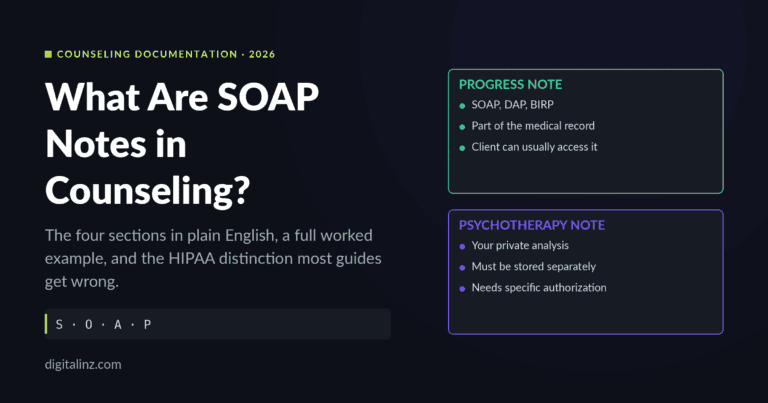
Progress notes are official entries in a client’s medical record. They detail symptoms, interventions, and responses during a session.
In contrast, psychotherapy notes are a therapist’s private reflections. These personal notes contain hypotheses and observations not required for insurance.
Progress notes must include treatment modality, frequency, and functional status.
Common Templates (SOAP, DAP, BIRP)
Standardized templates provide a consistent framework for your clinical work. They help you capture all necessary information without missing key details.
The SOAP, DAP, and BIRP formats are widely used. Each structures the note around core elements of the session. If SOAP is the one you use, our guide to SOAP notes for therapists covers the format in full, along with the nine mistakes that show up most often in documentation review.
| Template | Primary Focus | Key Components |
|---|---|---|
| SOAP Notes | Logical, problem-oriented assessment. | Subjective, Objective, Assessment, Plan. |
| DAP Notes | Streamlined, behavioral data. | Data, Assessment, Plan. |
| BIRP Notes | Tracking interventions and response. | Behavior, Intervention, Response, Plan. |
Choosing the right template saves valuable time. It ensures your notes support effective treatment plans and clear client goals.
How to Write Therapy Notes Faster
Transforming your approach to session records can turn a tedious chore into a streamlined part of your routine. The right methods free up your mental space for client care.

Embrace Technology and Automation Tools
Innovative software can handle much of the heavy lifting. Tools like the Blueprint AI Assistant auto-generate draft progress notes and smart treatment plans.
Voice dictation is another powerful option. Speaking your thoughts right after a session is often quicker than typing.
Utilize Shorthand and Pre-Formatted Templates
Develop a personal shorthand for common interventions and phrases. This cuts down on repetitive writing.
Pre-built templates, like SOAP or DAP, provide a ready-made structure. You simply fill in the information, saving valuable time.
Reserve Dedicated Time for Immediate Note-Taking
Block out ten minutes at the end of each appointment. This habit prevents a backlog and keeps your documentation current.
Consistency is key. A regular process ensures you stay on top of notes without evening work.
Optimizing Workflow with Digital Tools
The right software tools offer a powerful way to enhance your practice’s productivity and client care. Digital solutions streamline your administrative tasks, letting you focus on what matters most.
AI-Powered Documentation Solutions
Specialized AI charting systems can drastically cut your documentation time. They transcribe sessions and offer intelligent suggestions for your progress notes.
These solutions are built for behavioral health. They learn your organization’s tone and preferred style, making each therapy note accurate.
Ensuring HIPAA-Compliant Practice Management
Secure, cloud-based software keeps all records encrypted. This protects client privacy and meets strict regulations.
Your digital notes integrate directly into a client’s profile. Reviewing history before the next session becomes effortless.
| Digital Tool Feature | Primary Benefit | Compliance & Security Focus |
|---|---|---|
| Automated Session Transcription | Reduces manual typing by up to 70%. | Data processed with end-to-end encryption. |
| Centralized Cloud Storage | Access records from any secure device. | HIPAA-compliant servers with audit logs. |
| Integrated Client Profile | View full history and treatment plan in one place. | Role-based access controls protect sensitive data. |
| Paperless Practice Management | Eliminates physical files, improving organization. | Secure digital records with automated backups. |
Investing in this technology optimizes your entire process. It ensures your documentation is both accurate and compliant.
Effective Strategies to Reduce Documentation Time
A three-phase approach to clinical records—preparation, active documentation, and review—streamlines your entire workflow.
This method helps you capture essential information without letting paperwork dominate your day. You’ll spend less time on admin and more on care.
If notes are eating into your evenings, you’re not alone — and there’s a gentler way forward. The AI-Powered Practice Prompt Pack includes note-writing prompts designed with therapists in mind, so you can document sessions more efficiently without losing your voice.
Pre-Session Preparation and Checklists
Prepare a simple checklist before each appointment. This keeps you focused on key treatment goals and interventions.
Collaborative documentation can strengthen your alliance with the client. Discussing progress notes together ensures accuracy.
Real-Time Note Taking Techniques
Using a stylus and tablet allows you to jot down notes during the session. This maintains a strong connection.
Develop a personal shorthand for common phrases. This cuts repetitive writing and speeds up the process.
Post-Session Review and Editing
Keep your editing brief. Focus on clarifying observations for the official record.
Review past notes to identify non-essential details. This habit improves efficiency for future sessions.
| Documentation Phase | Primary Action | Estimated Time Saved |
|---|---|---|
| Pre-Session | Review checklist and client goals. | 5-7 minutes per appointment. |
| Real-Time | Use shorthand and tablet notes. | Up to 50% of in-session documentation. |
| Post-Session | Brief, focused editing and review. | 10+ minutes per therapy note. |
These tips create a sustainable practice. Your documentation becomes a helpful tool, not a burden.
Adapting Note Templates to Your Practice
Your documentation workflow gains incredible efficiency when you tailor your templates to fit your unique therapeutic style. A standardized format provides consistency, but personalization makes it truly powerful for your daily work.

Customization of SOAP, DAP, and BIRP Templates
Start with the framework you use, like SOAP or DAP notes. Then, modify it to include sections vital for your practice. You might add a dedicated space for client resources or homework assignments.
This approach reduces mental fatigue. You aren’t making as many decisions for each note. Many health professionals find this customization supports their specific clinical approach and client needs.
Integrating Checkboxes and Dropdown Lists for Efficiency
Incorporate interactive elements into your digital templates. Checkboxes and dropdown menus let you convey necessary information with a simple click.
Create a pre-defined list of common interventions and phrases. Selecting from this “favorites” list ensures consistency across all sessions and saves significant time.
| Customization Feature | Primary Benefit | Impact on Workflow |
|---|---|---|
| Conditional Logic Fields | Shows/hides relevant sections based on client data. | Eliminates scrolling through irrelevant template parts. |
| Pre-Populated Intervention Dropdowns | Standardizes language for treatment plans and progress notes. | Cuts repetitive typing by over 50%. |
| Audit-Ready Section Tags | Flags required elements for Medicaid or insurance reviews. | Ensures documentation is always compliant. |
Experiment with different structures. The right template becomes a seamless extension of your therapeutic process.
Maintaining Quality While Saving Time
Your session notes serve dual purposes. They must be both clinically useful and legally protective.
Finding this balance is key to a sustainable practice. You can create excellent documentation without letting it consume your day.
Balancing Detail and Brevity in Your Notes
Focus on essential themes and interventions. Avoid capturing every single word from the session.
This approach protects client privacy. It also keeps your progress notes concise and objective.
Ensuring Clarity and Compliance with Standards
Use plain language and limit abbreviations. This makes your record clear for any reviewing professional.
An objective tone is vital. It keeps your notes compliant and supports your work.
| Quality Aspect | Best Practice | Primary Benefit |
|---|---|---|
| Brevity | Document key themes, not every detail. | Saves time and upholds confidentiality for clients. |
| Objectivity | Stick to observed facts and avoid personal opinions. | Creates a defensible legal record and supports the treatment plan. |
| Clarity | Use common terms and full sentences. | Ensures information is understood by the entire care team. |
Thoughtful notes track client progress effectively. They form the backbone of high-quality therapy.
This balanced method supports the best outcomes. It lets you focus your energy on patient care.
Tips for Preventing Burnout in Documentation
Burnout among clinicians is often tied to administrative overload, but simple shifts in routine can make a profound difference. Protecting your own well-being ensures you can provide the best care.
Establishing a Consistent Documentation Routine
A regular schedule prevents notes from piling up. Block out ten minutes after each session for your progress notes.
This habit reduces end-of-day stress. It turns documentation into a predictable part of your process.
- Create a calming pre-writing ritual, like sipping tea.
- Review client goals from your last note to stay focused.
- Treat this time as a positive close to each appointment.
Incorporating Mindfulness and Breaks
Short pauses between appointments let you reset. A mindful moment improves your focus for the next client.
This practice supports your mental health. It directly benefits the quality of your therapy notes and treatment plans.
Regularly assess your documentation way. Adjust your records management to avoid feeling overwhelmed.
These small habits build a sustainable therapy practice. They help you maintain energy across all your sessions.
Conclusion
Ultimately, effective documentation empowers you to provide consistent, high-quality mental health care while protecting your own well-being. Your progress notes and therapy notes are the cornerstone of a sustainable, successful practice.
By refining your documentation format, you save valuable time and prevent burnout. This efficiency directly benefits your clients. Clear notes create a reliable roadmap for tracking progress and informing each treatment plan.
View every note as an opportunity to support client goals and strengthen your therapeutic alliance. Accurate records from each session safeguard your professional work and ensure continuity of care.
Your commitment to this process is a vital part of the healing journey. It allows you to focus your energy where it matters most—on the people in your sessions.
FAQ
What’s the main benefit of learning to document sessions more efficiently?
What is the difference between progress notes and psychotherapy notes?
How can using a template like SOAP help me?
Are digital tools secure for handling sensitive client information?
What is a simple strategy to avoid falling behind on documentation?
Can I customize a standard note template for my specific needs?
How do I keep notes thorough without writing lengthy novels?
What can I do if documentation feels overwhelming?
Your clients deserve your full presence — not a version of you that’s exhausted from paperwork. The AI-Powered Practice gives you the prompts to handle notes, treatment plans, and session prep more efficiently, so you can give more energy to what matters most.