
How to Use AI to Write Your Brand Story and Boost Impact
Did you know a MIT Sloan School survey found a startling gap? When they asked 4,000 managers, only 28% could correctly name three of their own firm’s top strategic priorities.
This internal confusion often spills outward. It creates muddy messaging and a weak market presence. Your company’s core strategy should be crystal clear to everyone, from the boardroom to your customers.
That’s where modern technology offers a powerful solution. You can learn how to use AI to write your brand story. It’s about aligning your internal goals with a compelling external voice.
A strong, authentic narrative is no longer a luxury. It’s essential for any business wanting to stand out. This guide will show you how to blend human creativity with machine-driven insights. The result is a consistent and impactful brand message that truly resonates.
Key Takeaways
- Internal strategy confusion is a common problem that weakens external marketing.
- A clear and compelling brand story is critical for differentiation and connection.
- Artificial intelligence tools can help synthesize strategy into cohesive narratives.
- The goal is to maintain an authentic voice while leveraging data-driven insights.
- Success lies in balancing creative human input with technological efficiency.
- A unified narrative ensures all your content speaks with one consistent voice.
- This process ultimately boosts your overall business impact and audience engagement.
Introduction: Embracing AI for Brand Storytelling
The journey of artificial intelligence in business is moving from its first steps into a more curious phase. Like a toddler, it’s learning rapidly but requires careful guidance. This new stage presents both incredible opportunities and fresh challenges for crafting your message.
Understanding the Role of AI in Modern Branding
At its core, this technology is designed to perform complex tasks that typically require human intelligence. It can analyze data, identify patterns, and generate text at scale. For your brand, this means a powerful tool to synthesize information and ideas.
Why Your Brand Story Matters
A genuine narrative connects with people on an emotional level. This connection fosters the trust that is essential for lasting customer relationships. It’s not just about listing features or facts.
Effective communication conveys your deeper purpose and values. It answers your audience’s search for meaning and alignment. When customers feel understood by a brand, their engagement and loyalty naturally grow.
How to Use AI to Write Your Brand Story
The process begins by leveraging specific digital tools designed for research and analysis. Platforms like SEMRush, Relative Insight, and Cision provide a powerful foundation. They help your teams understand the competitive landscape and audience sentiment.

Machine learning and artificial intelligence capabilities analyze vast amounts of customer feedback and market data. This happens in a fraction of the time manual research would take. You gain actionable insights into what resonates with your audience.
A professional writer remains a vital part of this workflow. Their role is to curate the data-driven output. They ensure the final brand voice and narrative feel authentic and human-centric.
By using these tools, your company can generate consistent content that supports its core vision. This approach maintains transparency and high-quality messaging. The goal is a seamless blend of creative ideas and analytical insights.
This fusion produces a compelling brand narrative that builds trust and delivers measurable results for your business.
Benefits of AI in Enhancing Your Brand Narrative
The real power of artificial intelligence in branding lies in its dual ability. It provides deep insights and fuels creative innovation.
This technology becomes a strategic partner for your company. It moves beyond simple automation to shape your core messaging.
Data-Driven Insights for Personalized Storytelling
Modern platforms analyze vast amounts of customer data. They uncover what truly resonates with your audience.
Amazon’s recommendation engines create a unique shopping experience for each person. Coca-Cola gathers social media insights to tailor its marketing strategies.
This approach builds stronger relationships. It turns raw numbers into a compelling narrative that fosters trust.
Enhancing Creativity with AI Tools
These tools handle the heavy lifting of data analysis. They free your teams to focus on the big idea.
Nike’s Fit app uses scanning technology for perfect product sizing. Spotify and Netflix employ machine learning to curate personalized content.
Your marketers can experiment more. Creativity flourishes when supported by intelligent platforms.
| Brand | AI Application | Benefit to Narrative |
|---|---|---|
| Amazon | Recommendation Engines | Personalizes the customer journey, increasing engagement. |
| Spotify & Netflix | Content Curation Algorithms | Creates unique, tailored experiences that retain users. |
| Nike | Nike Fit App (Scanning) | Enhances product storytelling with personalized fit data. |
| Coca-Cola | Social Media Insight Analysis | Informs marketing strategies with real-time consumer sentiment. |
Integrating Traditional Storytelling with AI-Driven Insights
Merging age-old narrative techniques with cutting-edge analytics creates a powerful synergy. Your brand can now craft messages that are both timeless and timely. This fusion respects tradition while embracing innovation.

Maintaining the Human Touch
Only people can truly empathize with the emotions driving your audience. A genuine voice and passion come from human writers, not machines.
Keep your teams at the center of the creative process. This ensures your story remains a true reflection of company values. As one expert noted, “Technology amplifies humanity, it doesn’t replace it.”
Blending Creative Vision with Analytics
Your marketing strategy should blend creative ideas with data-driven insights. This builds a narrative that resonates deeply with customers.
Prioritize trust and authentic experiences. Avoid generic content by using tools to enhance, not replace, human creativity. The result is a compelling brand narrative that delivers real business results.
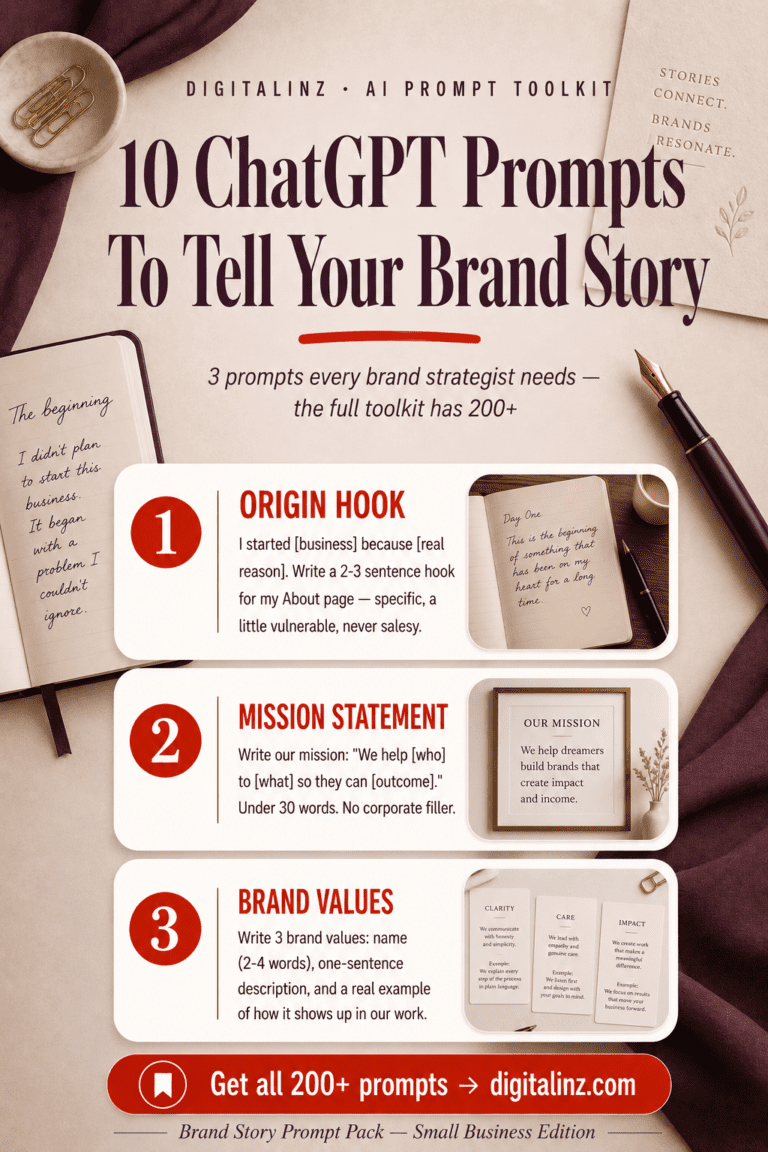
AI is a great collaborator when it comes to brand storytelling — as long as you feed it the right prompts. The Brand Story Prompt Pack was designed for small business owners who want to articulate their why, connect with their audience, and show up with confidence.
Step-by-Step Guide to Crafting an AI-Driven Brand Story
Your brand’s unique identity must guide every piece of content you create, especially when using automated tools. This clear, two-part process ensures your final narrative is both authentic and effective.
Defining Your Brand Values and Objectives
Start by clarifying your core principles. What does your company stand for? What are its ultimate goals?
This foundational work acts as a compass. It ensures any AI-assisted content aligns perfectly with your brand identity and long-term strategy.
Building a Narrative Framework
Next, map out the emotional journey for your audience. Identify key plot points that will build trust and connection.
A solid framework helps your teams maintain a consistent brand voice everywhere. This applies to social platforms and long-form articles alike.
When you provide clear prompts based on this framework, the technology supports your human storytelling. The result is a cohesive brand narrative.
| Step | Core Purpose | Key Actions |
|---|---|---|
| Define Values & Objectives | Establish the strategic and ethical foundation for all messaging. | Articulate mission, vision, and core brand promises. |
| Build Narrative Framework | Create a blueprint for consistent, emotionally resonant storytelling. | Map audience journey, define key messages, and set tone guidelines. |
Following these steps creates a brand story that is efficient to produce. It also delivers meaningful results for your business and customers.
Leveraging AI Tools for Market Research and Content Creation
Modern marketing requires a deep understanding of your audience. Artificial intelligence provides the precise tools to achieve it.
These platforms transform raw information into actionable data. They help you craft a story that connects on a personal level.
Conducting Audience Analysis with AI
Intelligent systems scan social media mentions and customer reviews in real time. This continuous analysis identifies emerging trends and public sentiment instantly.
You gain a clear window into what your audience truly values. This insight is the foundation for authentic storytelling.
Optimizing Social Media and Content Strategies
These tools categorize feedback and predict future interests. Your content strategy stays ahead of the curve.
This proactive approach ensures every post and article remains relevant. It keeps your brand engaged in meaningful conversations.
You can leverage a suite of powerful platforms:
- For text and creativity: Gemini, Cohere, Jasper, StoryLab.ai, Ink Lantern
- For visual content: DALL-E 2, Midjourney
- For video: Synthesia
Integrating these solutions provides the market research needed to understand desires proactively. You can produce high-quality assets efficiently, unlocking new marketing strategies.
Managing Ethical Considerations and Authenticity in AI Storytelling
Building a trustworthy relationship with your audience demands careful attention to data ethics. A Deloitte report confirms that privacy and security are top concerns for consumers.
Your brand must navigate these issues with clear policies and honest communication.
Addressing Data Privacy and Security Issues
People share personal information with the platforms they use. They expect that data to be handled responsibly.
Be transparent about your use of automated tools in marketing. Explain how you collect and protect customer information.
Mitigating Bias and Ensuring Transparency
Intelligent systems learn from existing data, which can contain hidden biases. Without oversight, your content might accidentally exclude groups.
Regularly audit the outputs from your storytelling tools. Ensure a human editor reviews and refines the voice.
Never just copy and paste generated text. Your authentic brand voice must shine through.
| Ethical Principle | Potential Risk | Recommended Action |
|---|---|---|
| Data Privacy | Unauthorized use of consumer information | Disclose AI use and data practices clearly |
| Bias Mitigation | Excluding certain audience demographics | Audit training data and outputs regularly |
| Authenticity | Generic, impersonal brand messaging | Refine AI-generated copy with human voice |
Addressing these points strengthens your strategies. It shows your audience that you value their trust and experience.
Conclusion
The future of compelling brand communication lies in a powerful partnership between human creativity and machine intelligence. Embracing this collaboration allows you to produce highly personalized stories that resonate deeply with your audience.
While technology provides incredible tools for research and generation, your authentic voice remains the core. Following a clear process helps integrate these platforms while keeping your unique identity intact.
Always prioritize transparency and ethical data usage. This commitment ensures your customers continue to trust your brand in a data-driven world.
Start small by experimenting with different solutions. Refine your approach to see how artificial intelligence can best support your specific business goals and deliver meaningful results.
FAQ
Can artificial intelligence truly capture my company’s unique voice?
How does this technology help with market research for storytelling?
What are the main benefits for my marketing teams?
Is there a risk of losing the human touch in our brand stories?
What ethical considerations are important with AI-driven content?
Which platforms or tools are most useful for this process?
Your brand story is more powerful than you think — you just need the right words to bring it to life. The Brand Story Prompt Pack gives you a step-by-step set of AI prompts to craft a story that resonates, connects, and converts. People buy from brands they believe in.