How ChatGPT for therapy notes Can Simplify Your Workflow
Did you know many mental health professionals spend over half their workday on paperwork? This administrative burden takes time away from client care.
A significant shift arrived in April 2026. OpenAI launched a dedicated platform for verified US clinicians. This move signaled a new era for clinical support tools.
It is crucial to understand the difference between general AI and secure clinical tools. The standard consumer version lacks the necessary safeguards for patient health information.
This guide explores how you can leverage modern technology to improve your practice. The goal is to maintain high standards of care while reclaiming valuable time. You can then focus more on the individuals you serve.
Key Takeaways
- OpenAI introduced a specialized platform for clinicians in April 2026.
- The standard, free AI chatbot is not secure for clinical documentation.
- Using the right tools can drastically cut down administrative time.
- Understanding legal and ethical guidelines is essential for compliance.
- Integrating technology allows for a more sustainable private practice.
- The focus should always remain on improving client care.
- Purpose-built AI assists with workflow without compromising security.
Overview: The Benefits of Using AI for Therapy Documentation
A recent industry survey uncovered a powerful trend: clinicians are turning to technology to reclaim their time. This shift is transforming how mental health professionals manage their workload.
The data behind this movement is compelling. Look at the key findings below.
| Study Focus | Key Finding | Impact on Practice |
|---|---|---|
| SimplePractice Survey (Nov 2024) | 50% of clinicians now use AI for daily tasks. | Improves overall practice management efficiency. |
| Therapist Time Savings | An average of 13 hours per week saved. | Allows for more dedicated client time and reduces burnout. |
| Clinical Safety Review | Physician advisors rated 99.6% of AI responses as safe and accurate. | Supports reliable and trustworthy clinical documentation. |
Why Efficiency Matters in Your Practice
Your energy is a finite resource. Every minute spent on repetitive administrative tasks is a minute not spent on client care or your own well-being.
Efficient systems protect your passion for the work. They help you build a sustainable career in health services.
Efficient documentation is not just about speed; it is about ensuring accuracy and reflecting true client progress.
How AI Reduces Documentation Burden
Intelligent tools handle the heavy lifting of note-taking and form completion. This automation gives you back hours each week.
When you use ChatGPT or similar platforms correctly, they become powerful allies. They tackle the paperwork so you can focus on the person.
The result is clearer focus, reduced stress, and a better balance for therapists. You regain control of your schedule and your practice.
Understanding HIPAA Compliance and Clinical Ethics
Every note you write carries the dual responsibility of clinical accuracy and legal compliance. Your practice depends on a system that protects client privacy while supporting efficient documentation.
HIPAA, BAAs, and Data Privacy
Under HIPAA, any vendor handling Protected Health Information (PHI) must sign a Business Associate Agreement (BAA). Using a non-compliant tool for a task involving PHI is a direct violation.
This can lead to fines up to $1.5 million per year. Your clinical documentation must follow the Minimum Necessary Standard.
Only share the minimum PHI required. Ensure your practice management systems use full encryption to prevent unauthorized access.
The Ethical Use of AI in Clinical Documentation
Public AI models often use input data for training, risking exposure of sensitive information. Your ethical judgment is non-negotiable.
You are 100% responsible for the final note you sign. A proper treatment plan must meet legal ethical standards and insurance billing needs.
This approach safeguards your client and your practice. It ensures tools support your work without compromising care.
Streamline Your Process with ChatGPT for therapy notes
A well-organized documentation process transforms a tedious chore into a swift, supportive part of your clinical day. This systematic approach ensures every client record is thorough and meets the high standards of your practice.
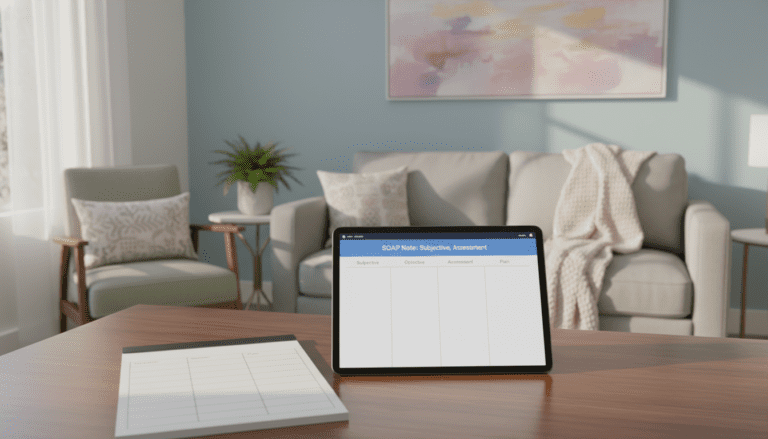
Begin by using AI to draft a structured SOAP note. You then review this draft for accuracy and clinical nuance. This method turns a repetitive task into a collaborative first step.
You can also generate templates for a treatment plan. This helps you stay focused during each therapy session. Your documentation becomes consistent and organized.
Tools like these save significant time on writing. You regain energy to focus on your client’s mental health. This is a game-changer for busy therapists and clinicians.
Intelligent tools are for documentation support, not a replacement for your professional judgment.
Your billing process improves when notes are complete and timely. Secure practice management systems integrate this workflow seamlessly.
Always verify the final note aligns with legal ethical requirements. This safeguards both your practice and the professionals you serve.
Integrating AI with Your Practice Management Tools
Imagine your scheduling calendar automatically updating client records. This seamless connection is the goal of modern practice management. Your systems should work together, not create extra tasks.

A November 2024 survey found 50% of clinicians now use AI for daily administrative tasks. This shift highlights a move toward unified practice ecosystems.
Seamless EHR and Scheduling Integration
When you use chatgpt or similar platforms, integration is key. Tools like Zapier can link your calendar to your EHR. A finished appointment can trigger a prompt to draft a clinical notes.
This flow keeps information accurate and saves you time. Your documentation process becomes a natural part of your day.
| Integration Area | Manual Task | AI-Automated Outcome |
|---|---|---|
| Scheduling | Manually create note reminders. | Appointment end auto-generates a note draft. |
| Client Communication | Send individual appointment reminders. | System sends personalized SMS/email alerts. |
| Data Entry | Copy-paste client info between platforms. | Bi-directional sync updates all systems. |
Automating Administrative Tasks and Billing
Automating billing changes your private practice. AI can suggest accurate codes based on your note content. It can also send payment reminders.
This cuts down the days your invoices sit unpaid. Mental health professionals regain hours each week.
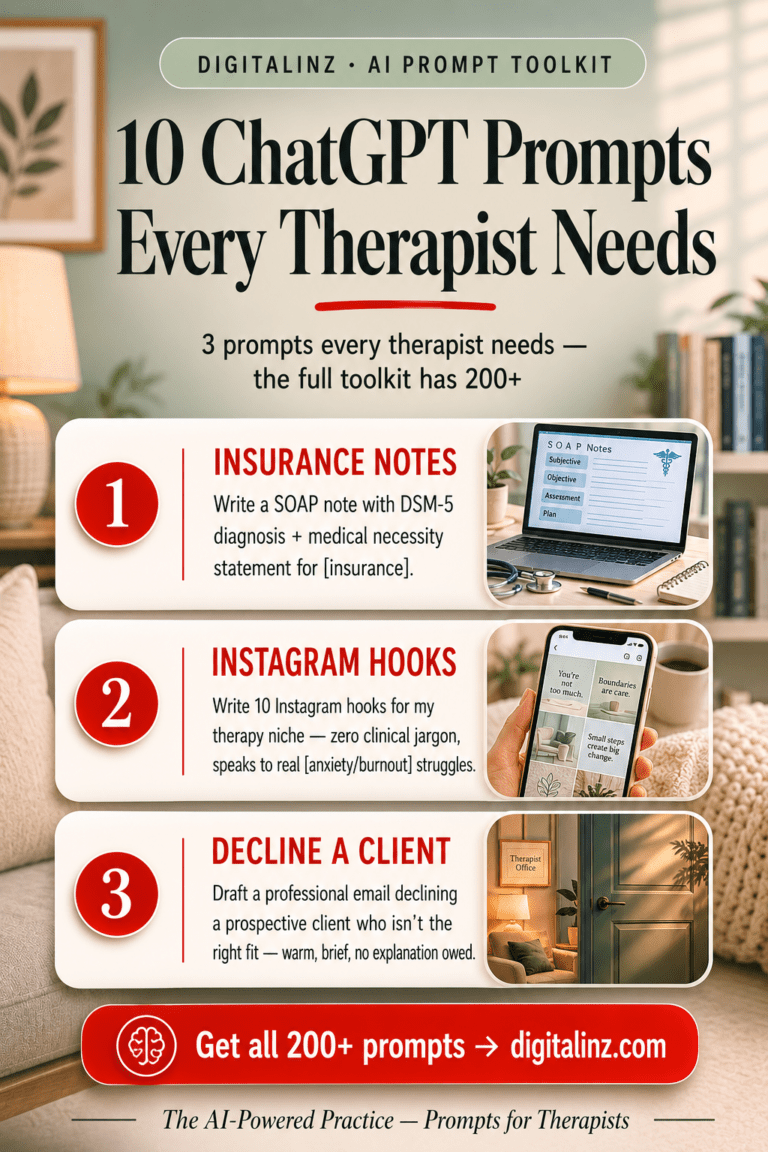
The trick is having prompts that already speak your language. The AI-Powered Practice Prompt Pack was written for therapists — so the outputs actually sound like you, not like a generic AI template.
→ See the Therapist-Specific Prompts
Automating routine work lets therapists focus on the expert care they provide.
You may also explore new tools. Many offer a credit card required trial period. Always verify their status for HIPAA compliance to protect client health information.
Step-by-Step Guide to Implementing ChatGPT in Your Workflow
A clear, step-by-step plan is your best friend when bringing AI into your daily workflow. This structured approach reduces stress and sets you up for long-term success in your practice.
Setting Up and Training Your AI Tool
Start by choosing one simple administrative task. Drafting a soap note is a perfect first project.
Your goal is to train the tool to match your unique clinical documentation style. Use the 99.6% safety benchmark from physician advisors as your quality target.
Provide the AI with several clear examples of your preferred note structure. This “teaching” phase is crucial for consistent output.
| Training Phase | Focus Task | Primary Goal |
|---|---|---|
| 1. Foundation | Drafting SOAP Notes | Achieve consistent structure and tone. |
| 2. Expansion | Outlining a Treatment Plan | Generate organized, client-focused frameworks. |
| 3. Integration | Suggesting Billing Codes | Improve coding accuracy and save time. |
Best Practices for Reviewing AI-Generated Content
Remember, the AI is a powerful drafting assistant. You bring the final expert care and professional judgment.
You must review every generated note for clinical accuracy and nuance. Check that all content meets legal ethical standards for your practice.
Document your training process. This answers frequently asked questions about your system’s status and supports good practice management.
For enhanced security in your private practice, consider premium services. These often require a credit card but offer stronger data protection.
Real-World Examples: Success Stories from Therapists
Real-world success stories offer a powerful blueprint for transforming your own administrative workflow. Seeing how fellow clinicians apply these tools provides concrete examples you can adapt.
Case Study: Efficient Clinical Documentation
Dr. Matthew Hitchcock, a family physician, saw his documentation time drop from two hours to twenty minutes per case. This is a major shift for any health professional.
A licensed counselor in private practice uses a similar approach. He inputs free-form session details, and the technology formats it into a proper SOAP note.

This reclaims days of effort each month. Both professionals now focus that saved time on direct client care.
Case Study: Enhanced Client Communication
Another psychologist automated appointment reminders and follow-up resources. This simple task saved several hours weekly.
The right tools like these turn communication from a chore into a consistent care extension.
You can use ChatGPT to draft blog posts or newsletters. This grows your practice management reach without hiring a marketing expert.
A common fact in these stories is ultimate clinician control. The therapist reviews every therapy note for accuracy.
They maintain their practice status through transparent, legal ethical use. This addresses frequently asked questions about safety.
| Professional | Primary Tool Use | Key Outcome | Impact on Practice |
|---|---|---|---|
| Family Physician | Streamlining clinical notes | Cut per-case doc time by 83% | Reclaimed hours for patient care and treatment plan focus |
| Licensed Counselor | Formatting session data into therapy notes | Automated a repetitive administrative task | Improved consistency and freed up mental energy |
| Psychologist | Automating client comms & content creation | Saved several hours weekly | Enhanced client engagement and practice growth |
These mental health professionals prove that intelligent systems support better billing, notes, and overall health. You may also find that a credit card required for premium features offers robust security for this approach.
Maximizing Productivity with Ethical and Effective AI Use
Think of AI as a highly skilled scribe that handles the structure, while you provide the clinical depth and judgment. This partnership is the key to boosting your efficiency without cutting corners on care. Your oversight turns a powerful tool into a trusted ally for your practice.
Maintaining Professional Oversight
A critical fact is your ultimate responsibility for every note you sign. You are the expert ensuring clinical accuracy. This approach safeguards your client and your professional license.
When using these tools, never include Protected Health Information in your prompts. This maintains your HIPAA-compliant status. Let the technology handle predictable administrative tasks like formatting.
This frees your mind to be more present and creative during sessions. Mental health professionals in private practice often report this reduces burnout risk.
| Aspect of Oversight | Manual Process | AI-Supported Process |
|---|---|---|
| Note Accuracy Check | You write and proofread every detail. | You review and refine an AI-generated draft. |
| Session Documentation | Spend significant time writing after each client. | Use a template to quickly capture and organize key points. |
| Workflow Integration | Juggle separate systems for scheduling, documentation, and billing. | Streamlined practice management where tools talk to each other. |
Therapists and clinicians find this method protects their energy. Your focus stays on the person, not the paperwork. The goal is to enhance your clinical notes so you can deliver better health outcomes.
Remember, the tool supports your work; it doesn’t replace your professional judgment. This mindset is the foundation of ethical and effective use.
Conclusion
Streamlining your workflow is not just about saving time. It’s about reinvesting your energy into what matters most: your client‘s well-being.
The 2026 launch for clinicians marked a turning point. As a mental health professional, your approach must always prioritize HIPAA compliance and your own expert oversight of all notes.
Choosing the right practice management systems lets you automate administrative tasks. This supports a more sustainable private practice where you focus on care, not paperwork.
Remember, these tools are here to support your judgment, not replace the human connection at the heart of therapy. Stay informed on evolving legal ethical standards to protect your practice and professionals you serve.
We hope this guide gives you the clarity to use technology safely, enhancing both your documentation and the health outcomes for your clients.
FAQ
Is using an AI assistant for clinical notes secure and HIPAA compliant?
How does this technology actually save me time on documentation?
Can I integrate this with my existing practice management software?
What’s my role if the AI is writing the notes?
Are there ethical concerns with using artificial intelligence in my private practice?
How difficult is it to get started and train the system?
Simplifying your workflow starts with the right tools. The AI-Powered Practice gives you 200+ prompts crafted for private practice therapists — so documentation feels less like a burden and more like a 10-minute task at the end of your day.