Can ChatGPT Write Performance Reviews? 4 Rules for 2026
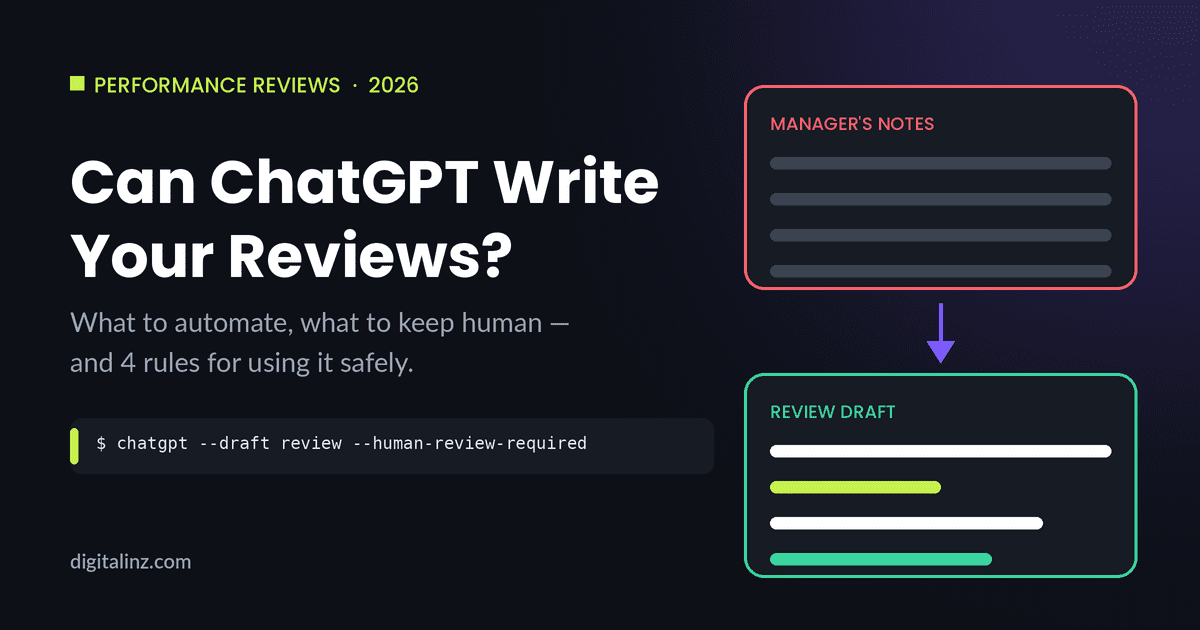
Can ChatGPT write performance reviews? Yes — it can turn a manager’s rough notes into clear, well-organized review language in minutes. But writing performance reviews with ChatGPT only works well when you’re clear about what it’s good for and what it isn’t. Here’s the breakdown of what to automate, what to keep human, and 4 rules for using it without creating more problems than it solves.
What ChatGPT Can (and Can’t) Do for Performance Reviews
The honest answer to “can ChatGPT write performance reviews” is: it can write the words, but it can’t do the judgment. That split matters more than it sounds.
What ChatGPT is good at:
- Turning a manager’s rough notes and bullet points into a clear, well-organized review
- Keeping tone and structure consistent across a whole team’s reviews
- Summarizing 360-degree feedback from multiple reviewers into one narrative
- Drafting a development plan or goals section based on a manager’s input
What should stay with the manager:
- The actual rating or score — meets, exceeds, or below expectations
- Specific examples and evidence, which only the manager has
- Decisions tied to compensation, promotion, or performance improvement plans
- The conversation itself — delivery, tone, and follow-up
That second list is where most of the risk lives. The U.S. Office of Personnel Management’s guidance on performance management frames reviews as an ongoing process tied to specific, observed work — not a document generated at the end of the year. An AI tool that’s never seen someone’s work can’t fix a disconnected review. It can only make it sound more polished, which can make the underlying problem worse, not better.
4 Rules for Using ChatGPT on Performance Reviews
If you keep these four rules in mind, ChatGPT can save real time on the writing without taking over the parts that actually matter.
Rule 1: Use ChatGPT to Draft Structure and Language — Not the Rating
ChatGPT is good at turning a manager’s rough notes into a clear, well-organized write-up. What it can’t do is know whether someone actually hit their goals. The rating — and the evidence behind it — has to come from the manager, every time.
If a manager’s note says “Sarah did great with the onboarding project,” ChatGPT can turn that into a polished paragraph. But deciding whether “did great” means Sarah exceeded expectations or simply met them is still the manager’s call, based on what was actually delivered.
Rule 2: Always Start From the Manager’s Own Notes — Not a Blank Prompt
The single biggest failure mode for AI-written reviews is genericness: language so vague it could describe almost anyone. That happens when a manager asks for a review with nothing real to work from. The fix follows the same principle as writing any good ChatGPT prompt — the more specific the context you provide, the more useful the output.
Instead of “write a performance review for a marketing manager,” feed ChatGPT the manager’s actual notes: “Launched the Q2 campaign two weeks early, grew newsletter signups 18%, mentored two junior hires.” The output will sound like the person it’s actually about — not a template.
Rule 3: De-Identify Before You Paste Anything In
Performance review content is some of the most sensitive material in HR — names, ratings, sometimes compensation or disciplinary history. Before pasting any of it into ChatGPT, swap names and identifying details for role descriptions, the same approach covered in ChatGPT and employee confidentiality.
“Write a review for [an employee], a Senior Analyst on the finance team, covering Q2” works exactly as well as using a real name — and keeps the conversation safe if it’s ever shared, screenshotted, or logged.
Rule 4: The Manager Personalizes and Delivers It
A ChatGPT draft is a starting point, not a finished review. The final version needs the manager’s voice — specific moments only they witnessed, the tone they’ll use in the conversation, and a realistic follow-up plan. A review that reads as obviously AI-written can undermine trust at exactly the moment it matters most.
Before the meeting, read the draft out loud. If it doesn’t sound like something you’d actually say to this person, face to face, edit it until it does.
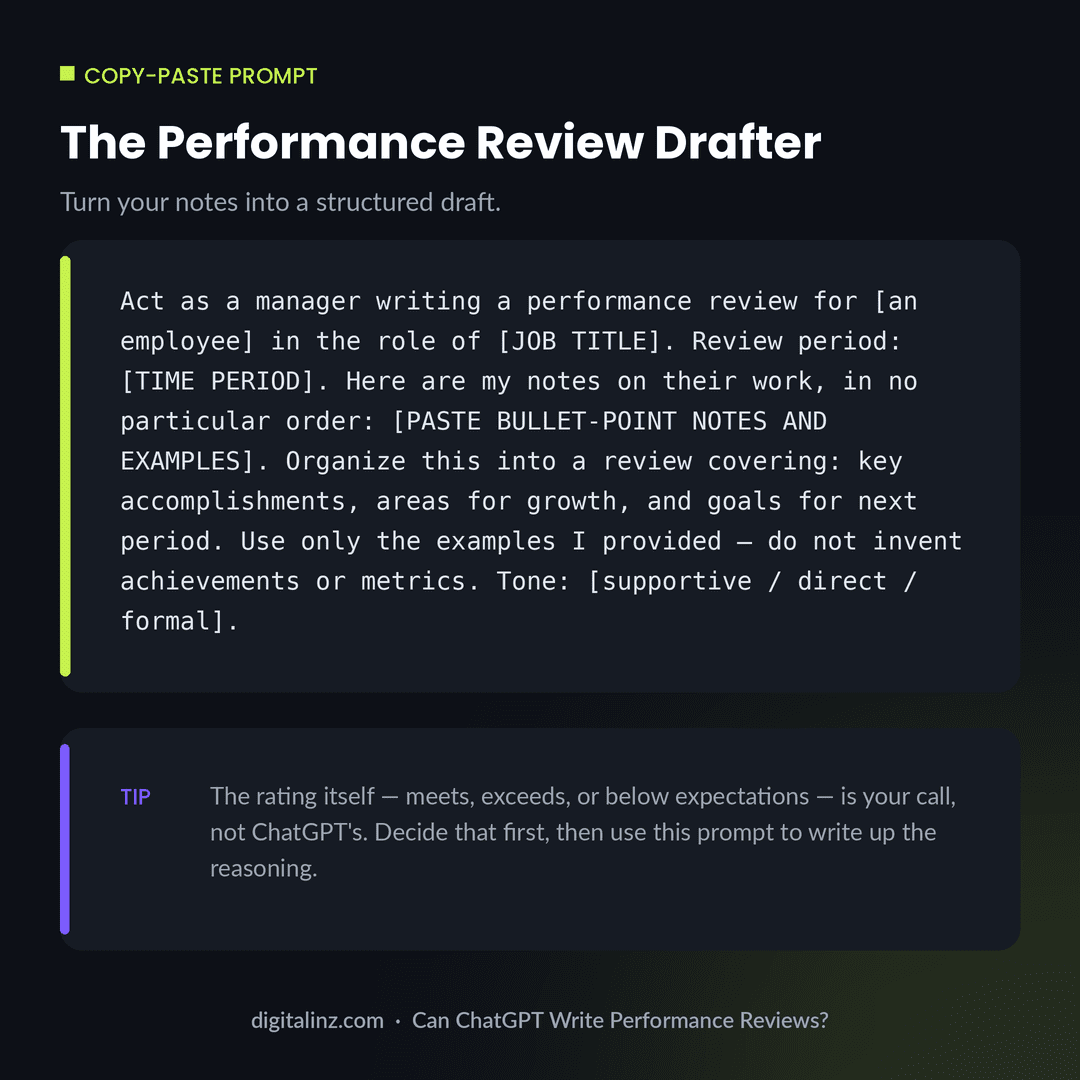
Copy-Paste: The Performance Review Drafter
This is the prompt to start with once you’ve gathered your own notes on someone’s work.
Before and After: Generic vs. Evidence-Based Review
Same employee, same review period — but only one of these is actually about them.
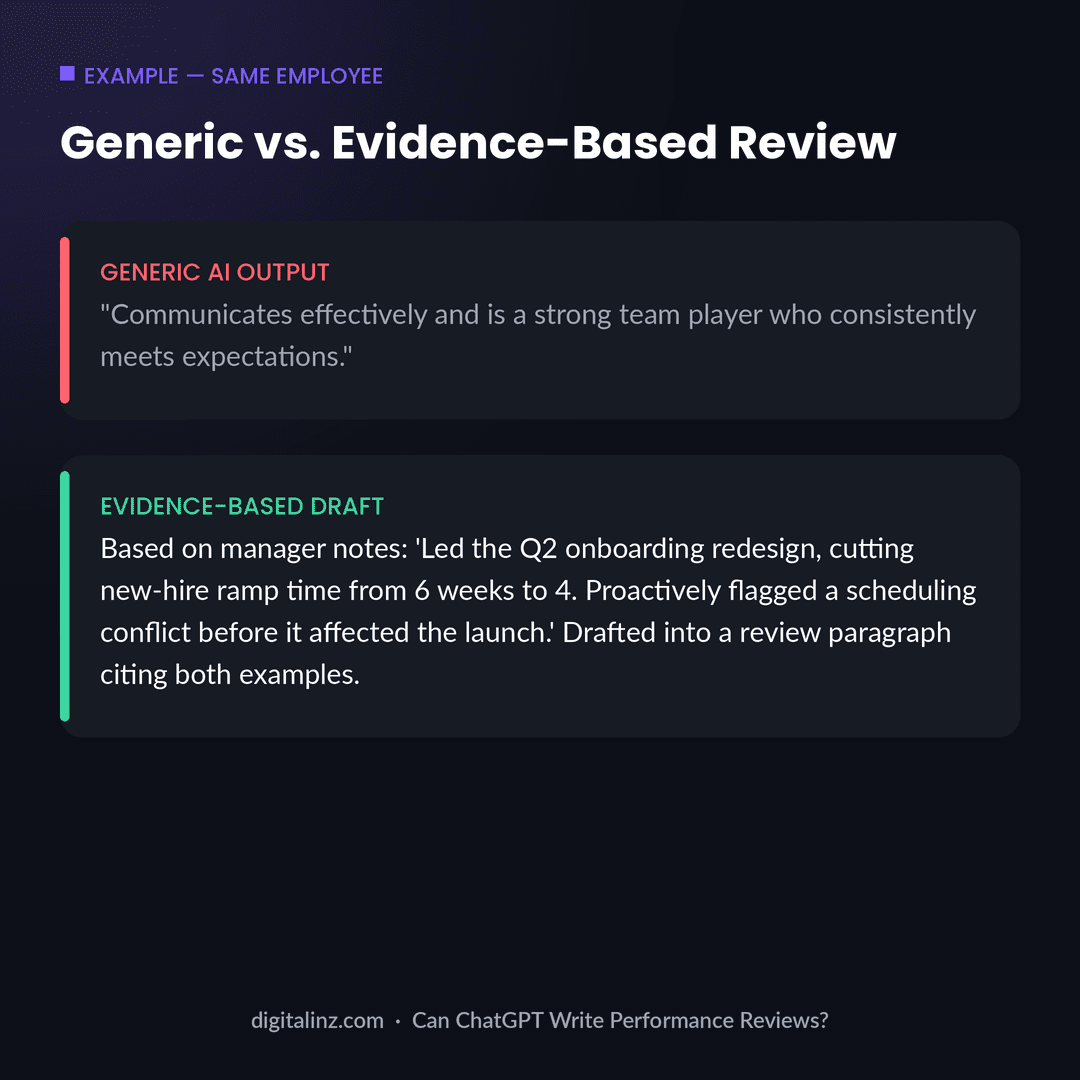
The generic version could be pasted into anyone’s review with no edits — which is exactly the problem. The evidence-based version is built from the manager’s own notes, so it reads as a record of what this person actually did. That’s the difference between using ChatGPT to skip the work and using it to write performance reviews faster without losing the substance.
FAQ: Can ChatGPT Write Performance Reviews?
Can ChatGPT write performance reviews?
Yes, ChatGPT can draft the language and structure of a performance review based on a manager’s notes. It can’t determine the actual rating or know what an employee did — that information and decision has to come from the manager.
Is it safe to use ChatGPT for performance reviews?
It can be, if you de-identify the content first — using role descriptions instead of names and avoiding sensitive details like compensation or disciplinary history. Treat anything you paste into ChatGPT as text that could be seen or logged elsewhere.
Will employees know if a review was written by ChatGPT?
They might, if the language feels generic or doesn’t match how the manager normally writes. The fix is to always start from the manager’s specific notes and examples, and to read the draft aloud before using it — if it doesn’t sound like something the manager would say, it needs editing.
What’s the biggest risk of using ChatGPT for performance reviews?
Genericness. A review that could describe almost anyone undermines the whole point of a performance review, which is to reflect what a specific person did. ChatGPT should organize and polish a manager’s own observations — not invent them.
The Shortcut
Building a review prompt library for every role on your team takes time — especially if you’re applying these rules consistently across dozens of reviews each cycle. Our HR AI Toolkit includes 200+ ready-to-use prompts for performance reviews, development plans, and 360 feedback summaries — all built around de-identified, notes-first templates from the start.
Also available on Gumroad.